

Breaking bad: How to Flip the Script
Or why tropes are an important ingredient for fun.

Just watched Nolan’s Odyssey in glorious IMAX 70mm, and it made me think about Breaking Bad. Well, first, it made me think of Charlize Theron and Anne Hathaway. Repeatedly. But after – Breaking Bad. Why? Because, despite the incredible visual feast Nolan cooks up (and I was truly impressed), the screenplay is an absolute afterthought. And no, this isn’t a breakdown of the Odyssey yet.
But it is an Ode to screenwriting.
BREAKING BAD, WRITING GOOD
You can watch the scene below and skip to my analysis:
But if you’d rather I recapped it, here you go:
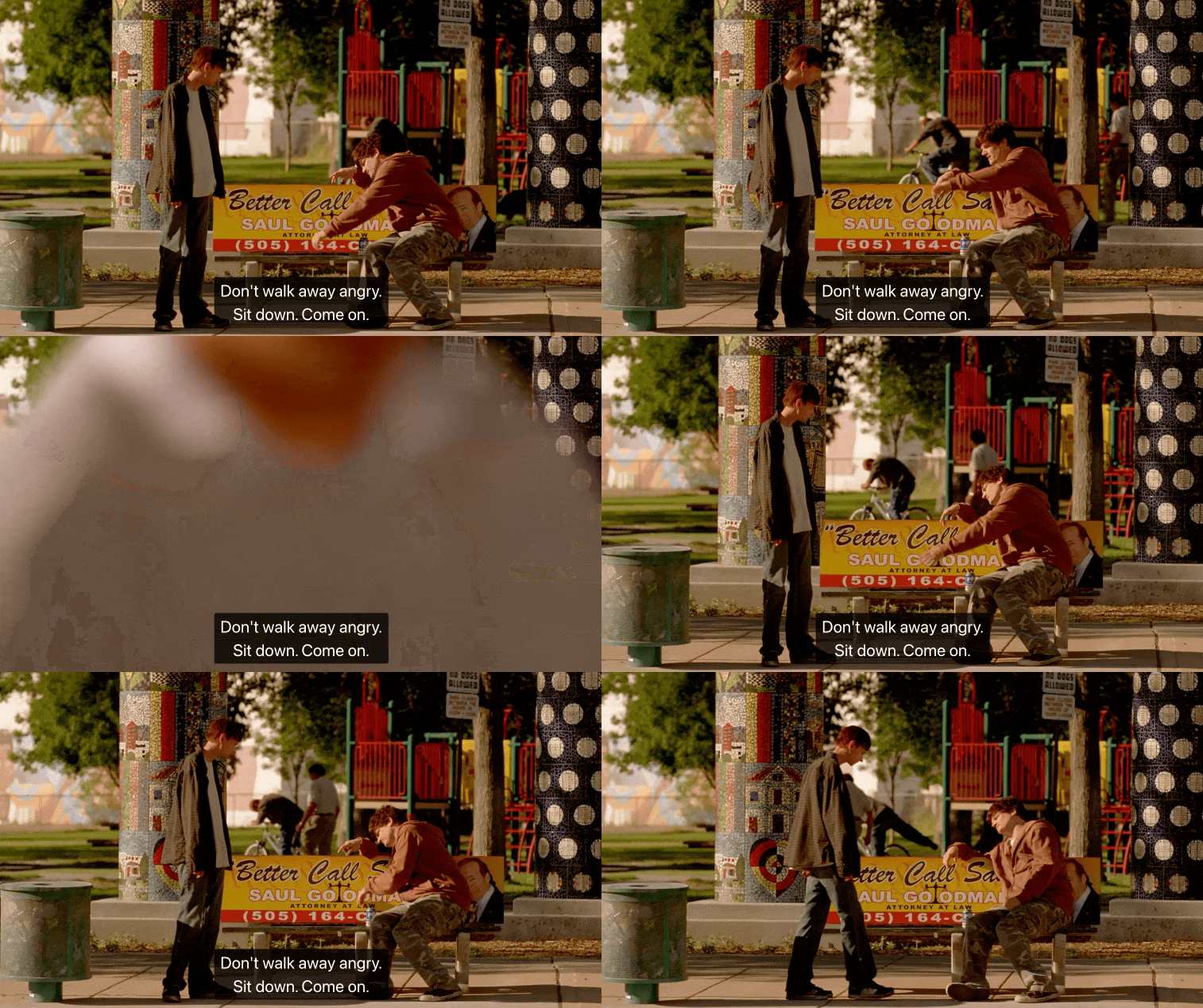
Badger is out selling the famous blue meth. The shrimpiest dude you’ve ever seen joins him on a bench and asks for a teenth.
BADGER: Dude, I so smell bacon.
CUSTOMER: What? What are you talking about?
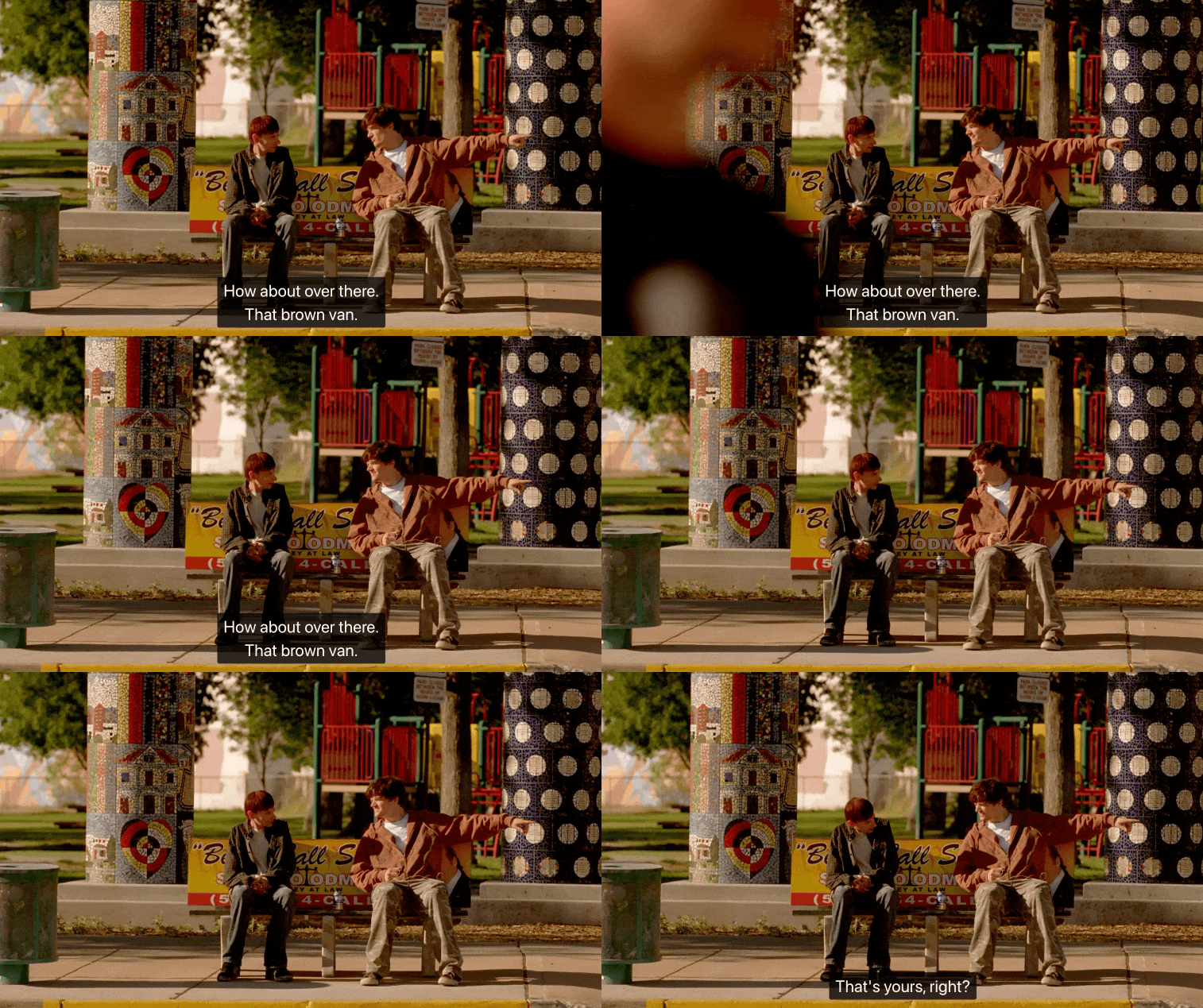
Badger’s almost disappointed as he points out a brown van and a flower van parked “inconspicuously” nearby. Clearly the shrimpy dude is a cop, and this is a setup.
The customer gets a bit nervous.
CUSTOMER: Dude, I just wanna get high.
BADGER: You know what you should do is a garbage truck. Seriously, I don’t mean no disrespect… but if you put a bunch of cops in the back of a garbage truck, there’s no way I’m seriously thinking that there are cops in the back of a garbage truck. It’s a freebie yo, just think about it.
The customer seems upset as he gets up about to leave.
But Badger is a kind soul. He feels bad for the guy and invites him back. Only the customer doesn’t want to buy anymore. So Badger practically has to convince him.
CUSTOMER: I think you turned me off to the whole thing.
BADGER: Come on, don’t be like that. I just need you to prove it (that you’re not a cop). You know.
How does one prove he’s not a cop? Badger suggests the shrimpy dude punches someone on the street. He refuses - he is too shrimpy.
The negotiation reaches an impasse, until…
The customer remembers that a cop, if asked directly, can't lie about being a cop!
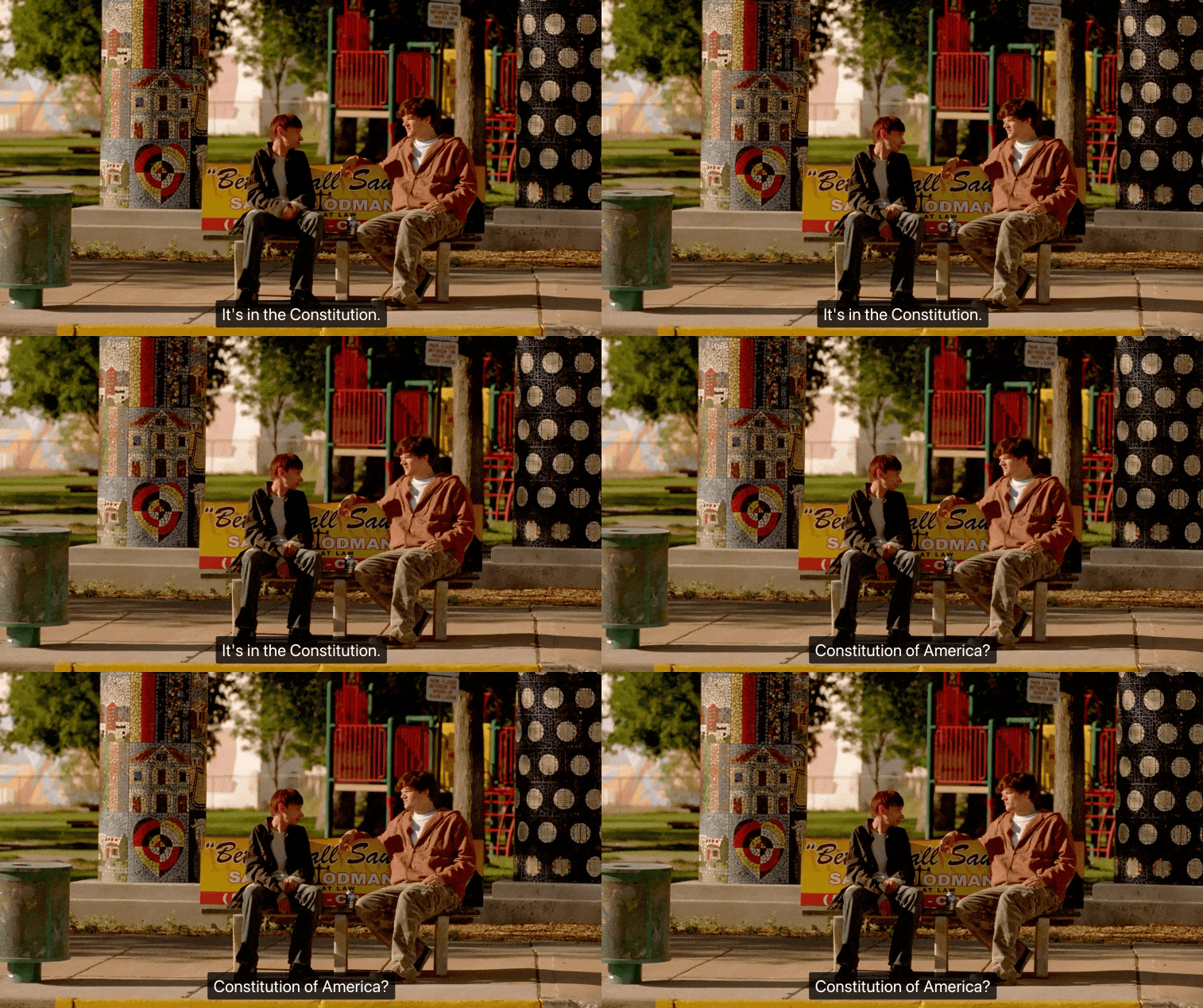
CUSTOMER: It’s in the constitution.
BADGER: Constitution of America?
Now that Badger is protected by the constitution, he finally makes the deal.
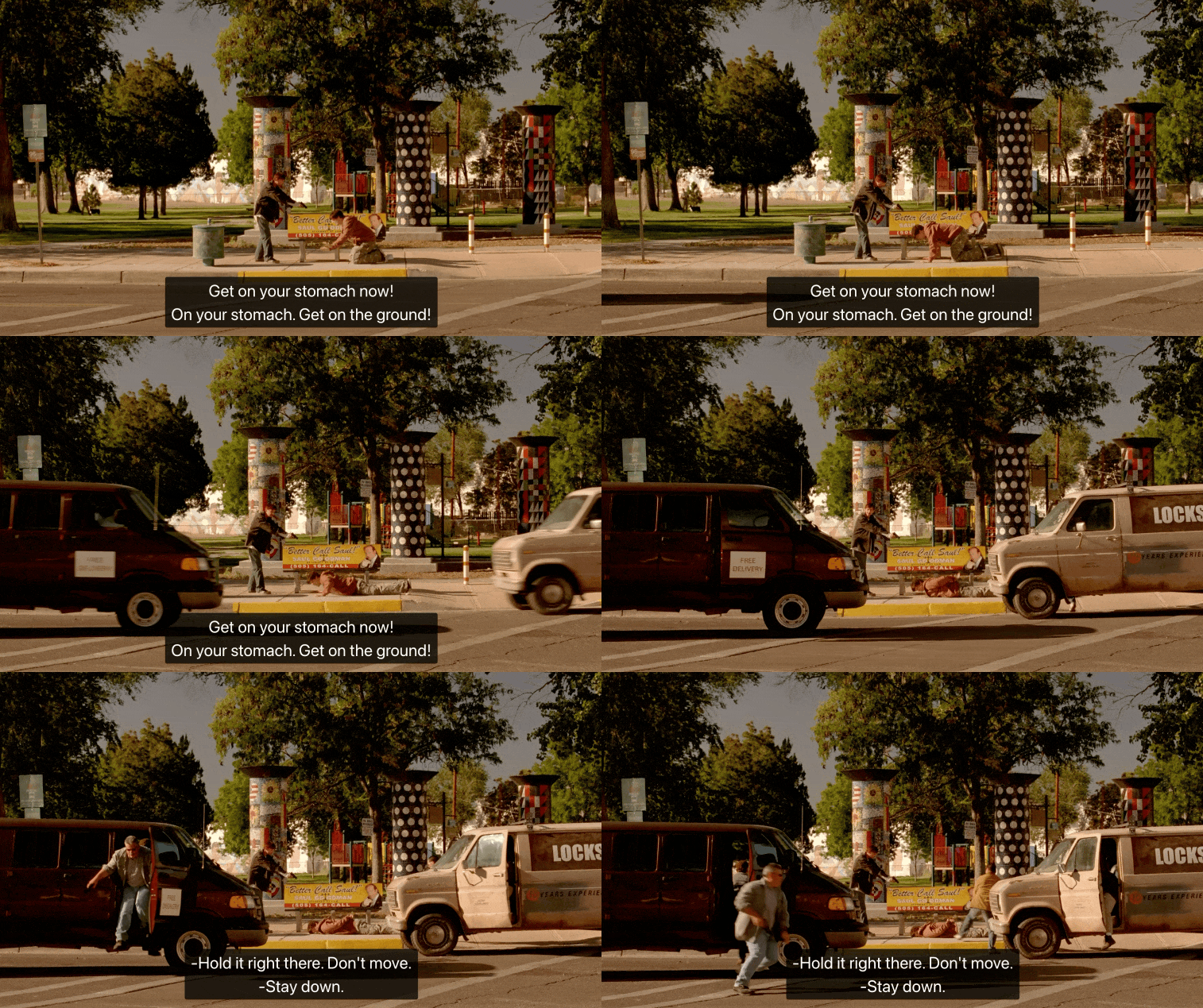
And of course immediately gets arrested by the shrimpy cop as the brown van and the flower van pull up.
WHY IT WORKS PSYCHOLOGICALLY
Benign Violation (Script Opposition)
Count the actual jokes in this scene. Go on, I’ll wait. There’s the garbage truck bit, and… yeah, that’s about it. Everything else is two guys on a bench haggling. And yet it plays like a sketch.
Because the scene isn’t telling a joke. It’s running two stories through the same bench at once.
Psychologists call those stories scripts — and yes, they stole our word, so bear with me. A script here just means the running order you’ve memorized for a familiar situation. Walk into a restaurant and you already know the next hour: menu, order, eat, pay, leave. Nobody taught you that. You’ve just seen it a thousand times.
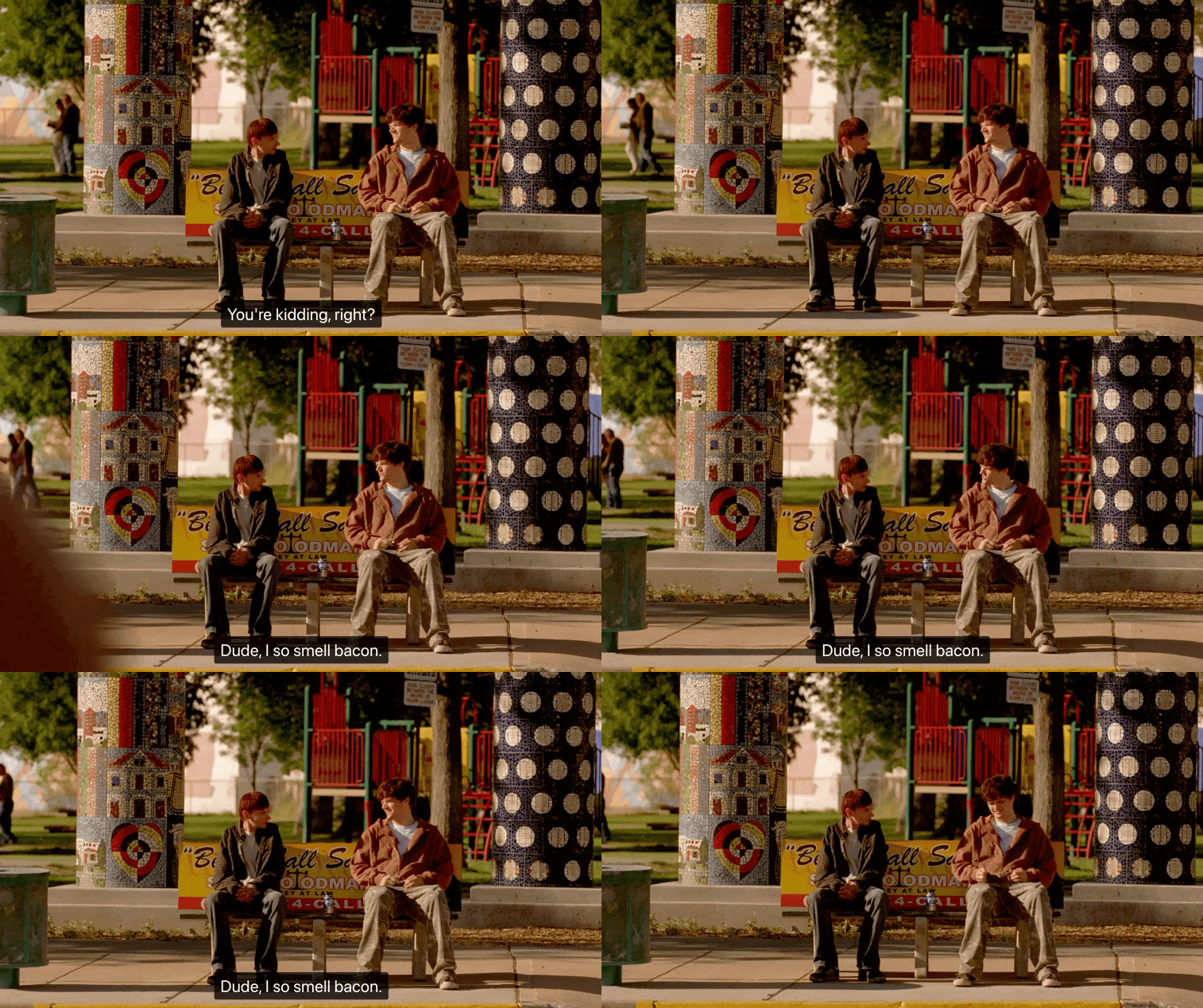
You’ve also seen the undercover buy a thousand times. Cop plays it casual, dealer sniffs him out, cop scrambles to look legit. And the scene opens exactly there — “Dude, I so smell bacon.” Badger’s running the script perfectly.
Then it flips. The cop is the one pleading (“I just wanna get high”). The dealer is the one closing. The cop has to audition for the right to be sold to — punch a stranger, or come up with a constitutional argument. Every beat is still recognizably the buy-bust, and every beat is backwards. That’s Victor Raskin’s theory of humor (1985, later with Attardo): comedy shows up when one situation fits two opposite stories at the same time. The grind between them is the joke. Which is why the scene barely needs any written.
Now, my hypothesis was that the more familiar the trope, the harder the reversal hits. Half right — and the wrong half is worth having. It isn’t surprise. In 2021, Warren, Barsky and McGraw put twenty-plus competing humor theories against the actual evidence and found surprise doesn’t separate funny from unfunny at all. The proof’s in your own rewatches: you know the cuffs are coming, and it’s still funny.
So what does a worn-out trope actually buy you? The rule. You’ve seen this scene hundreds of times so the rule was installed in your brain without you even knowing. Badger isn’t surprising. He’s wrong — and we all know precisely what he’s wrong about.
But wrong on its own isn’t funny. Wrong is usually just alarming. Peter McGraw and Caleb Warren’s fix is the neatest idea in humor research: something’s funny when it feels wrong and harmless at the same time. Their go-to example is tickling. It’s an attack (someone’s grabbing you) but nobody gets hurt, so you laugh. Stop the attack and there’s nothing. Push it too far and it’s assault. The laugh only lives in the overlap.
An arrest sits well over on the “harmful” side. So how does this one land as a punchline? Distance. McGraw’s 2012 studies found that the worse the thing, the more room it needs: big violations get funnier from further away, small ones get funnier up close (a guy slipping and crashing into a pool fully clothed is funnier when it’s your mate than a stranger). Prison is a big one. Put Walt or Jesse on that bench in season two and we’re far too close — we’d be gripping the armrest. Badger is the distance. We like him, we’re not invested in where he ends up, and the identical scene tips from dread into farce.
And then the character part, which is what keeps it harmless instead of just random. Last issue we covered spontaneous trait inference — you file people away based on behavior, without ever deciding to. Badger’s been filed for two seasons: kind, dim, oddly principled. So when he chases down his own arresting officer because he’s hurt the guy’s feelings, we don’t think “what the hell.” We think “oh, of course.” Behavior we can predict doesn’t read as menace. It reads as character — and character is safe to laugh at.
That’s the whole machine. A script everyone knows, flipped so the dealer has to sell the cop on buying. A guy whose kindness makes the flip inevitable. And enough distance that the handcuffs land as a punchline instead of a gut-punch.
Psychology Cheat Sheet:
What it is: Benign Violation (Script Opposition) — the scene takes a setup we all know by heart (undercover cop buys from dealer), swaps who’s chasing whom, and keeps us far enough from the character that a bust plays as comedy.
What it does: Gets laughs out of pure behavior and haggling (minimum written jokes) by making a familiar situation go wrong in a way we can read instantly.
Why it works (science): Something is funny when it feels wrong and harmless at the same time (benign violation theory — McGraw & Warren; think tickling, an attack that doesn’t hurt). The over-familiar trope supplies the “wrong” by installing the rule Badger breaks — and it’s the rule-break, not the surprise, doing the work (a 2021 review found surprise doesn’t separate funny from unfunny, which is why the scene survives rewatching). Distance supplies the “harmless”: the bigger the violation, the more distance it needs (McGraw et al.), so a side character can absorb an arrest as comedy where Walt or Jesse would turn it into dread.
Effect on viewers: We laugh at behavior instead of punchlines, feel safe watching what’s technically a disaster, and stay hooked through a few minutes of two men negotiating on a bench.
HOW TO WRITE YOURSELF SOME FUNNY BUSINESS
Flip the script
To subvert a script, first we need to pick one. And it must be universal, because it significantly raises your chances of knowing exactly what your audience will be thinking.
In the spirit of the World Cup, take a soccer match. You might not know all the rules, but you have a pretty good idea what to expect – at the bare minimum two teams playing each other, trying to score and win the game. That’s your script.
Once you got the script, think about how you can flip it. What if one team is supposed to throw the game for money, but they’re still so much better than the opposition that it’s hard to “lose” without making it obvious? Now we still know that a game can only end one of three ways (lose, draw, win), but we’re engaged to see how it plays out.
Keep your distance
Don't connect the audience emotionally to a character in peril or you risk swapping comedy for suspense. But how?
Choose a character the audience is not connected to, but still interested in / familiar with (like Badger) and let them go through the ordeal. In other words, use your secondary characters.
If using your main character (or a character the audience is connected with emotionally), make sure you’re going for a small violation / problem that they find themselves in. Something painful, but ultimately benign.
In The Hangover, Stu (dentist) finds himself missing a tooth. A painful nuisance, but a nuisance nonetheless. So – funny. Imagine, he found himself with his ear cut off. Not that funny anymore.Use less emotionally charged language. A lot of distance falls onto audio-visual language (more on visual comedy here), but you can still do a few things on the page.
Instead of going into detail like “Badger pulls his headphones out, eyeing the shrimpy customer up and down”— which ties us to Badger's subjective experience and opens space for suspense, maybe skip the eyeing and leave the neutral 'Badger pulls his headphones out. The context will take care of the eyeing.
Use the character
The fun of character-driven humor is in how religiously the characters pursue their goals. All you have to do is keep their tactics true to their behavior.
Translation:
You need active goals. Ideally, from both sides (if you have two active characters in the scene). Even better if the goals are opposing (one wants to make a bust, the other to evade the arrest – only one can win).
Stakes. High stakes are very important, because they’re at the core of the characters going the extra mile. If you want more spice, get some urgency in.
Consistent behavior. Consistent in the sense that the audience clearly knows the character’s traits and won’t be surprised when that trait is used in an “over-the-top” manner.
To introduce a trait you can use a proof device: have the character use / show their trait twice in different circumstances and the audience’s brains will take it as a constant.
I just want to point out. This is a sort of cold open to the episode. Its function is solely to convey that Badger got caught. They could’ve made this scene 1 minute long with the cop asking for meth, Badger refusing, 30 seconds of back and forth, Badger caves in.
They could’ve thrown that info into a phone call that Jesse gets, a dialogue between him and Walter.
But they chose to make it into a fun scene. Because for Peter Gould (and Vince and the team, of course), the script wasn’t an afterthought.
Question for you. I love Breaking Bad. I rewatch it probably once a year. Who else is with me? And also what wins: Breaking Bad or Better Call Saul?
Also — the episode is called “Better Call Saul”. Make of that what you will.
I’d appreciate it if you responded to this email with your thoughts or left a comment.
Enjoy.
Until next time.