

How to Create Visual Comedy
And why in comedy sharing the experience with the character is actually the worst thing you can do. Breaking down One Battle After Another.

Netflix is buying Warner Bros. Ted Sarandos says they’ll shorten theatrical windows “to be more friendly to the consumer.” I wonder if Ted ever watches the 90% of content his company makes… Note the word “content.”
Even if this is how the cinema-going experience dies, there are still a few things to look forward to before it’s over. And we had one of those experiences already — a monstrous $150 million action black comedy One Battle After Another.
I’ll preface this by saying that, although I have mixed feelings about the story and wouldn’t rank it alongside PTA’s classics, the film is indisputably made by a master filmmaker. And those are the people to learn from. Especially when it comes to visual comedy.
But before we start.
This is the very important button to click on. Suuuuper important. Don’t leave it hanging.
And if you are somehow reading this and you’re not subscribed… go away. Or subscribe. It’s free!
One Scene After Another
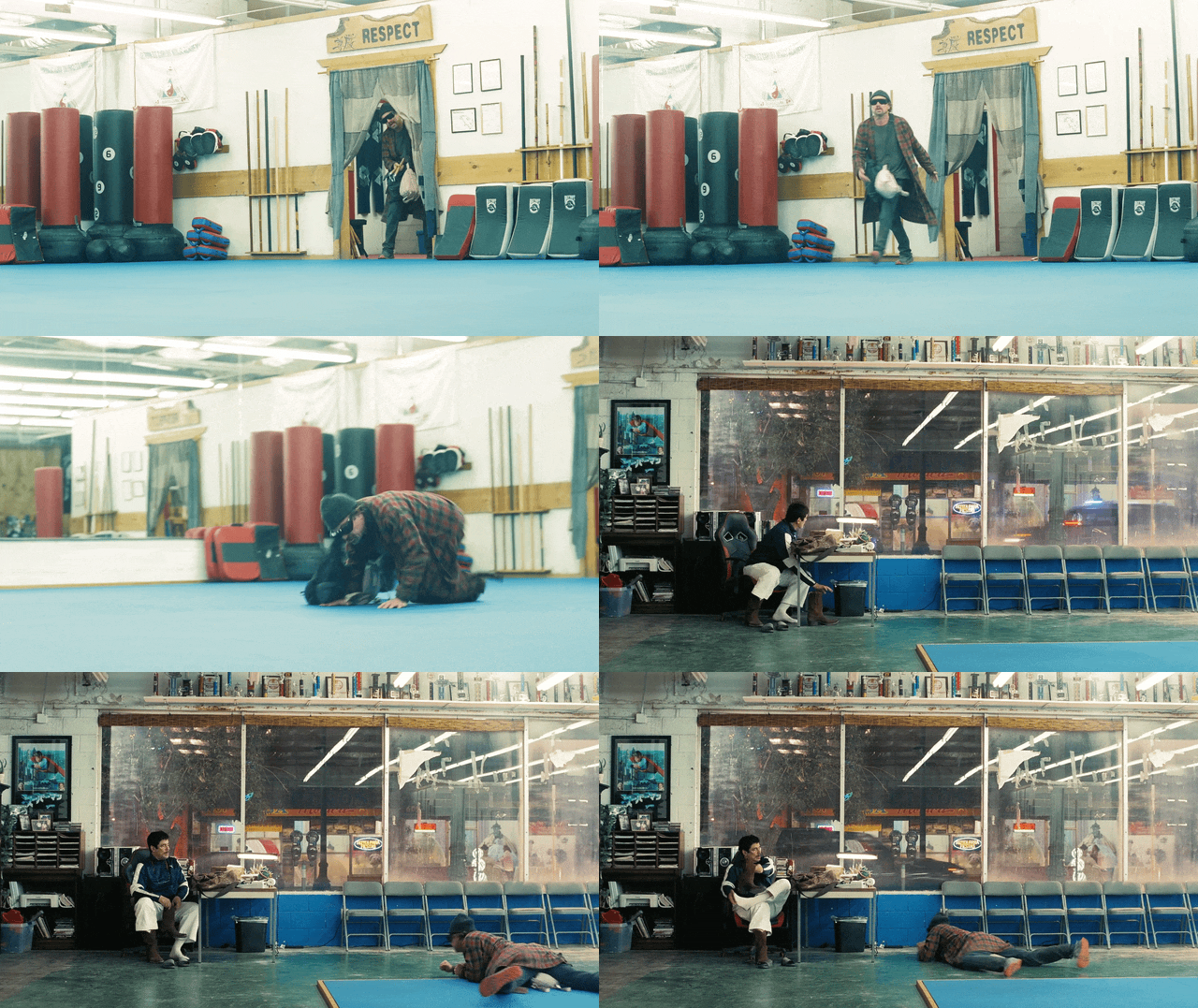
Bob/Leo DiCaprio was right to be paranoid. The government is after him after all. Having fortuitously escaped the raid at his home just in time, Bob makes it over to Sensei’s (Benicio del Toro) martial arts studio in search of help.
While Sensei calmly talks on the phone (figuring out the situation with the crackdown on illegal immigrants), Bob is desperately looking for a gun, but can only find a pair of nunchucks… before ducking down to a crawl as a police car drives by.
All the while, Sensei puts on his boots, asking Bob what happened to him — cool as a cucumber.
BOB: They’re comin’ after me and Willa, right now. Right now.
SENSEI: That’s heavy metal, bro.
As Sensei packs his work stuff in a bag, Bob continues spiraling. Sensei promises to get Bob a gun once they get to his home, turns the lights off, bows to the tatami, and is on his way when Bob finally manages to break the man’s inner peace by stepping on the tatami.
The two take a breather (guess who initiates that one?) and are finally out.
And that’s the scene. It’s not the most important one in the movie, nor is it the most dramatic one. But it’s gold when it comes to visual comedy.
Why It Works Psychologically
1. Why do Sensei and Bob being so different engage us so much?
Contrast in Behavior (orienting response)
Our attention is riveted by contrast – in this case, the stark difference between two behaviors. A hysterical man invading a tranquil studio is a big red flag to our neural alarm system (in a fun way), which in turn kicks in the orienting response in our brain. We instinctively focus on the mismatch, an evolutionary habit from spotting anomalies in our environment. In essence, contrast = novelty, and novelty glues attention.
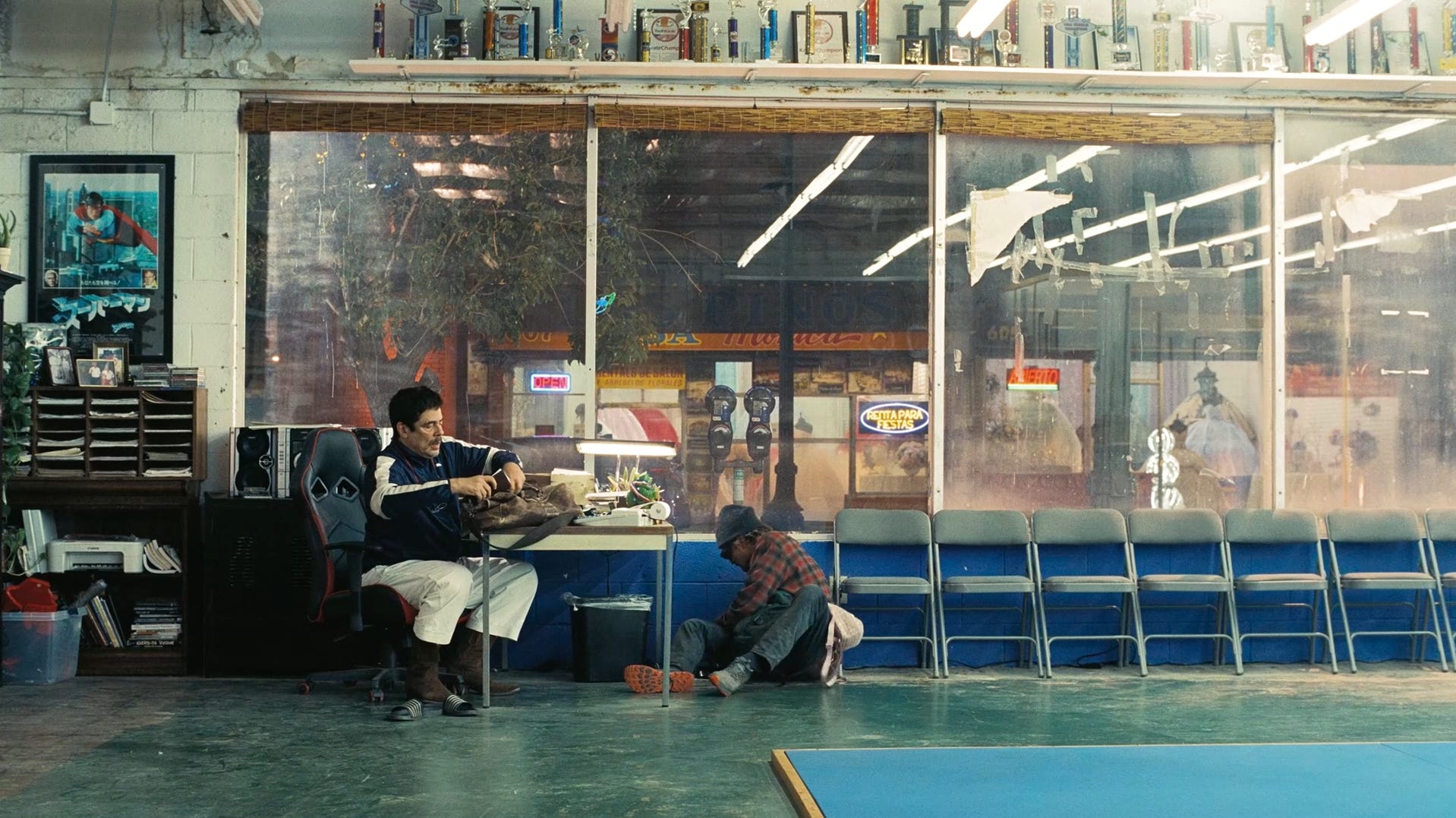
Just as importantly, this push-pull between absurdity and calm creates tension (even if it’s silly tension). Bob’s insanity “bounces” off Sensei’s zen sanity – each makes the other feel more extreme. (This is the contrast effect at work: our perception of each personality is heightened by the presence of its opposite.) If both characters were panicked, the scene would flatline into pure chaos with no baseline of normalcy. In other words, “If everyone’s unusual, no one is.” You need one foot on solid ground. Sensei’s composure is that ground – a “straight man” anchoring reality so Bob’s madness has something to play against.
The contrast in demeanor also engages our social cognition: we can’t help comparing the two. We might even subconsciously take sides – usually aligning with the calm, rational character (Sensei) as the voice of reason.
In sum, the scene taps into multiple attention systems (novelty, conflict, comparison), keeping us mentally glued and primed to giggle at the imbalance.
Psychology Cheat Sheet:
What it is: Orienting response activated by a clash of opposites – one character freaking out, the other zen-calm.
What it does: Grabs attention through novelty and sets up a “voice of reason vs. chaos” tension that drives the humor.
Why it works (science): Our brains are wired to notice contrasts and resolve mismatches. A contrast effect enhances each personality by comparison. Plus, a calm anchor prevents sensory overload – if everyone is crazy, it’s just noise.
Effect on viewers: Engagement and focus. We’re intrigued by the imbalance, we appreciate the relief of a sane viewpoint, and we’re ready to laugh at how ridiculously far Bob overshoots the norm.
2. Why are there no “written jokes”, but it’s still funny?
Character-Based Humor (Incongruity and Benign Violation)
We’re laughing at who Bob is and how he behaves, not at any clever joke he tells. The scene draws its comedy from exaggeration grounded in truth. Bob’s paranoia is cranked up to 11, yet it stems from a real emotional place (he’s genuinely scared). Sensei’s tranquil demeanor is equally dialed up (almost supernaturally calm), yet it fits his wise mentor persona. Because each character acts true to themselves, the humor feels earned. Audiences instinctively pick up on these authentic traits.
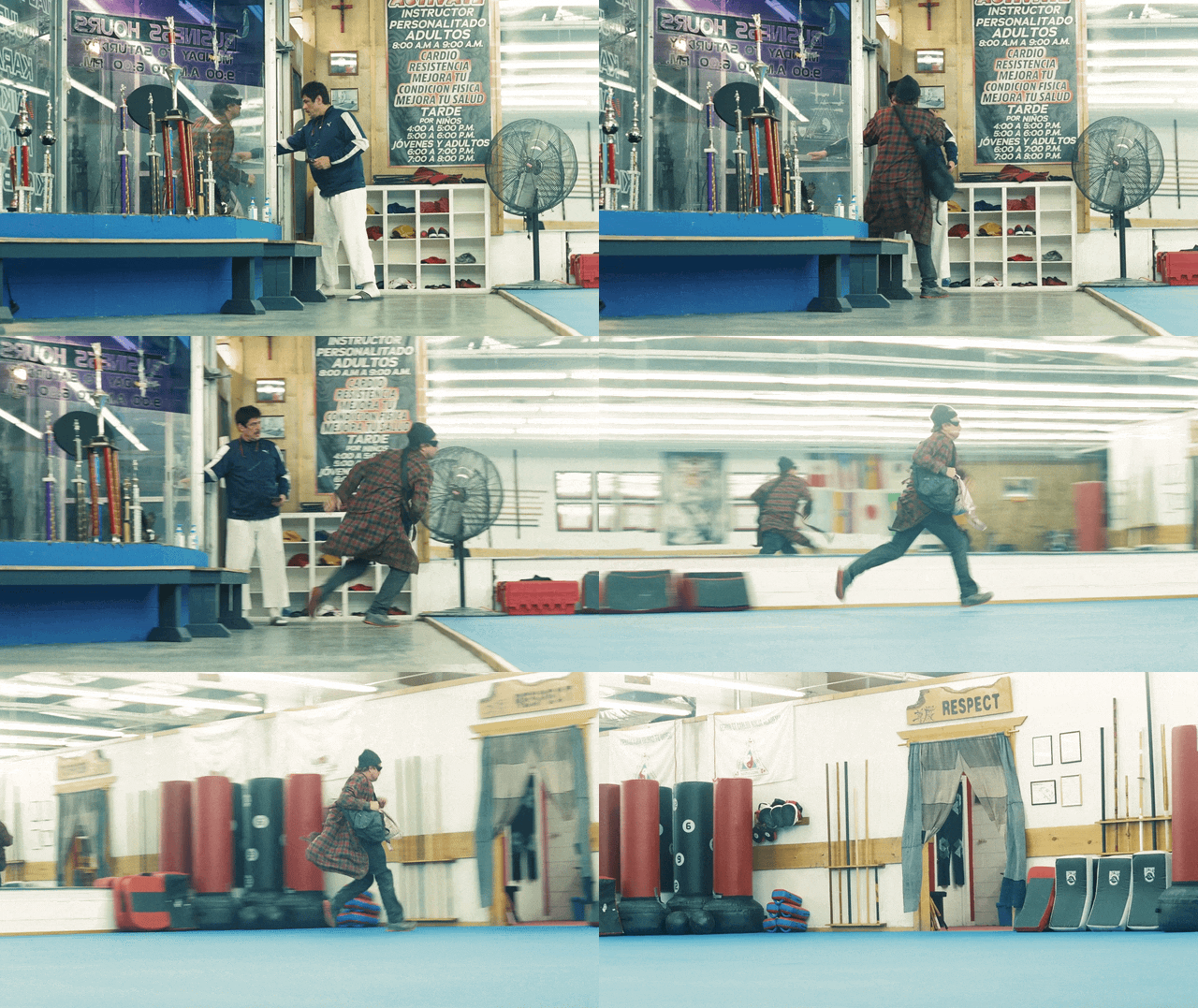
So how do we find this funny without overt jokes? Psychologically, it comes down to incongruity and benign violation. Bob barging into a peaceful dojo, flailing and babbling, is an incongruous situation – it violates our expectations of how a martial arts studio scene “should” go. According to humor theory, a situation becomes funny if it’s a violation of norms that we still perceive as harmless or “benign.”
Here, Bob’s behavior is a social violation (he’s behaving very inappropriately for a dojo!), but Sensei’s unbothered reaction signals to us that no real harm is done. The result? Our brains get the “all clear” to laugh. In fact, studies show humor and fear are biological opposites: fear spikes stress hormones, while humor triggers dopamine and soothing opioids. We essentially get a relief reward when something scary or outrageous turns out safe. Bob’s exaggerated panic, viewed in a safe context, hits that sweet spot. Neurologically, we experience a mini reward for recognizing “Ha, that was crazy, but it’s okay.”
Crucially, the characters’ behaviors, however exaggerated, are consistent and predictable in hindsight. We don’t sit there thinking “What the hell are they doing?” because the scene has set up who these people are: Bob is high-strung; Sensei is chill. When they act at the extreme end of those traits (like Sensei telling Bob off ‘cause he stepped on the tatami), it feels appropriate (just dialed way up). This consistency helps us label the behavior as intentional humor rather than random weirdness.
Altogether, these factors engage our neural humor circuitry without a single scripted joke. We’re laughing at the characters themselves – at the human comedy of an anxious single father and a zen guru thrown together.
Psychology Cheat Sheet:
What it is: Comedy drawn from the characters’ own personalities, rather than traditional jokes.
What it does: Turns genuine character traits up to cartoonish levels, creating humorous situations that feel both absurd and oddly truthful.
Why it works (science): It exploits benign violations – outrageous behavior that’s ultimately harmless. Exaggeration sparks incongruity laughter (it’s not what we expect), but emotional authenticity keeps it relatable. The brain’s reward centers love a surprise that confirms what we thought we knew (“Yep, that’s so Bob!”), releasing dopamine and endorphins when we see a crazy-but-safe outcome.
Effect on viewers: We laugh with recognition. We’re not laughing at a clever punchline; we’re laughing because we know Bob and Sensei (or people like them) and seeing them react exactly as they would – just in the most exaggerated, entertaining way.
3. Why are we not feeling the same panic Bob does, and that actually makes the scene better?
The principle of separation (objective POV)
One reason this scene stays funny (instead of terrifying) is that the film keeps us at arm’s length from Bob’s panic. We witness the chaos as observers, not as participants. The camera doesn’t shake or cut to frantic close-ups and POV shots that are supposed to transport us into Bob’s emotional state. Instead, it holds a wider, steady view – we see poor Bob ranting and Sensei calmly watching, almost like we’re in the room with them, not inside the experience of either of them.
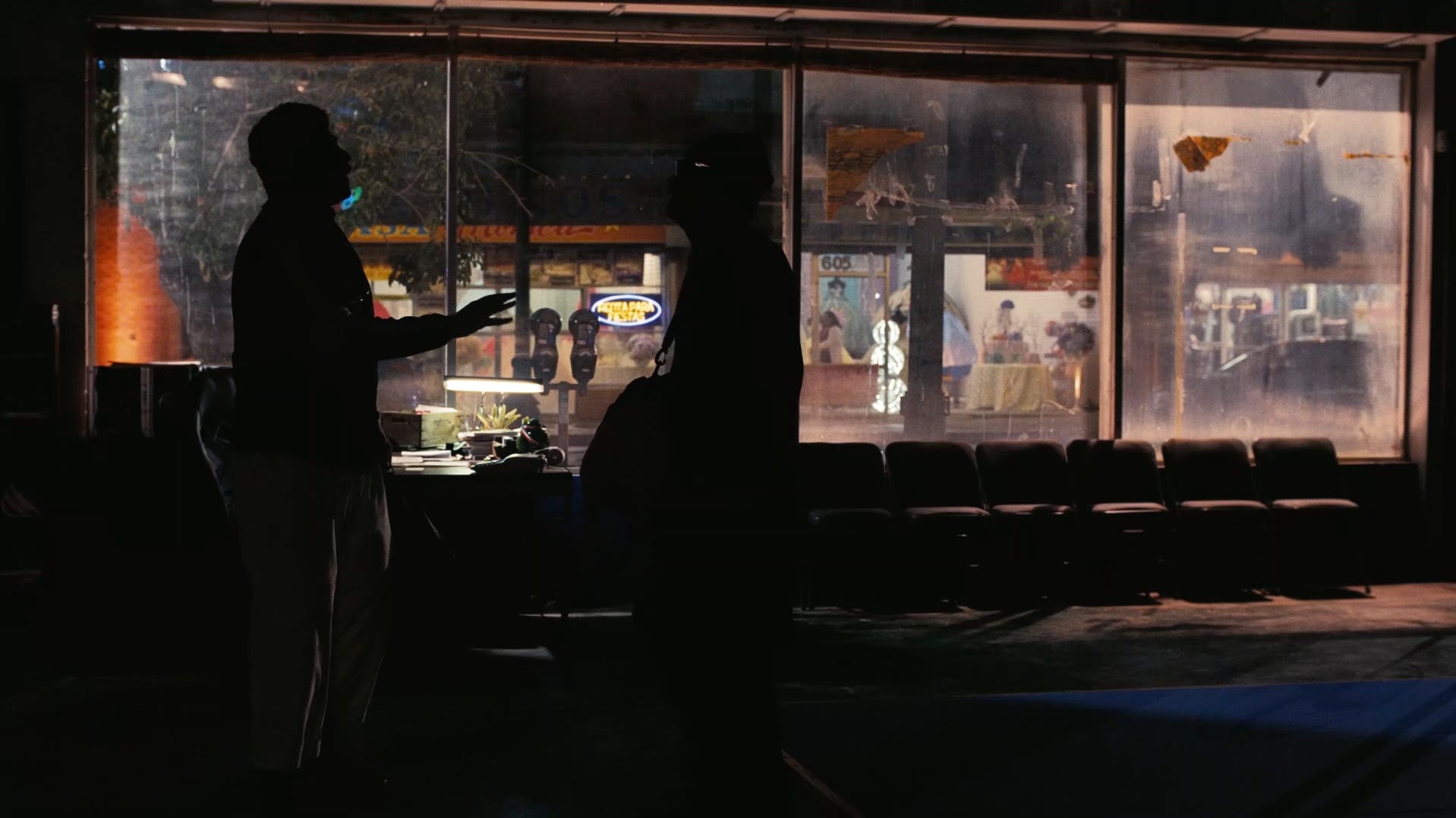
Research on horror-comedies shows that increasing the viewer’s psychological distance from scary events flips the experience from fear to humor. Essentially, when we’re less emotionally invested (because the characters are either less relatable, or the situation feels less “real,” or the audio-visual language keeps us at arm’s length), our brains can reappraise a threat as something benign and funny.
Think of how a monster can be shot in a horror movie (close, dark, fragmented, intense – terrifying) versus in a spoof (wide shot, well-lit, maybe shown in full – suddenly silly). Here, Bob’s “monsters” are all in his head, and by not putting us in that head, the film renders them toothless and amusing. We watch Bob rant and Sensei gently humor him, and we’re chuckling because we’re in on the joke, watching from a safe third-person perch.
Psychology Cheat Sheet:
What it is: The principle of separation via objective POV – the scene is presented with a bit of distance through the use of objective visual language, heightened circumstances, and contrasting soundtrack.
What it does: Keeps us from getting too emotionally wrapped up in Bob’s fear. We remain clear-headed enough to appreciate the humor of the situation rather than feeling genuine panic.
Why it works (science): Psychological distance transforms fear into fun. When we’re detached, the brain’s threat alarms stay dimmed; we appraise the wild events as not truly dangerous. Objective camera framing provides that detachment (no intense empathy triggers). Essentially, it tricks our mind into viewing Bob’s ordeal as a benign spectacle, inviting laughter instead of alarm.
Effect on viewers: We feel safe and “in on the joke.” Instead of heart-pounding anxiety, we experience lighthearted amusement. By watching from the outside, we can laugh at Bob’s overreaction and enjoy the comedic chaos, all while staying emotionally unscathed.
Emm… Can you even write all that?
Yes. You and I both can. Though, PTA made Boogie Nights at, like, 26 so……………..
1. Want to have two characters bounce off each other?
Pick physical actions that show the major differences in characters’ personalities, so that one can highlight the extremes of the other.
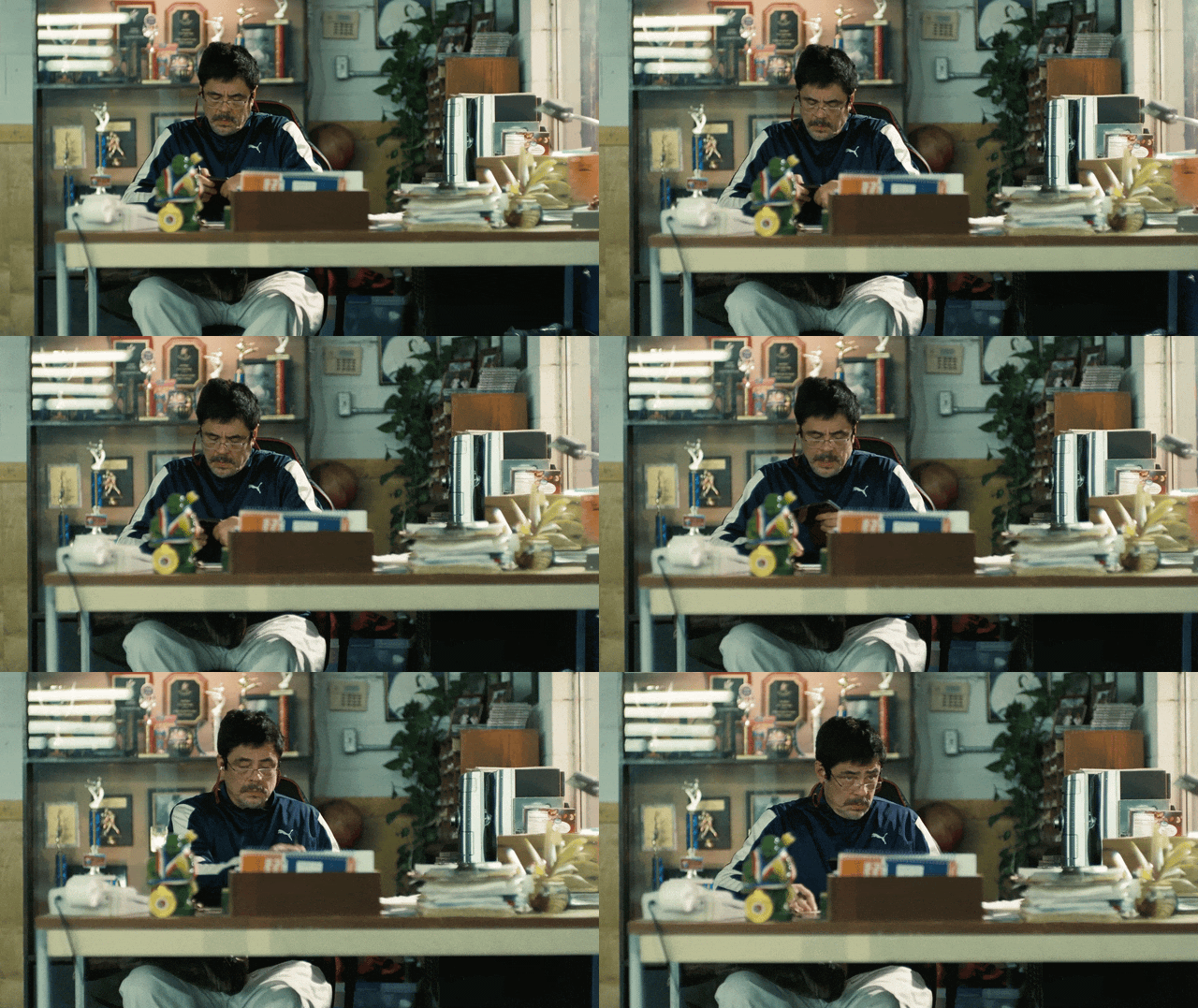
In the screenwriting medium, we can only experience characters through their external behavior, so try to pick telling, visual cues for the reader to latch onto.
Bob storms into the dojo, reappears with nunchucks, chucks them away, hunkers down as the cop car passes — all very colorful actions. In contrast to him, Sensei barely moves, calmly talking on the phone, then putting on his boots, and finally bowing to the tatami.
2. Not good with jokes, but want to add humor?
Pick active circumstances, goals, and tactics and stay true to them. Humor out of behavior, not behavior for humor.
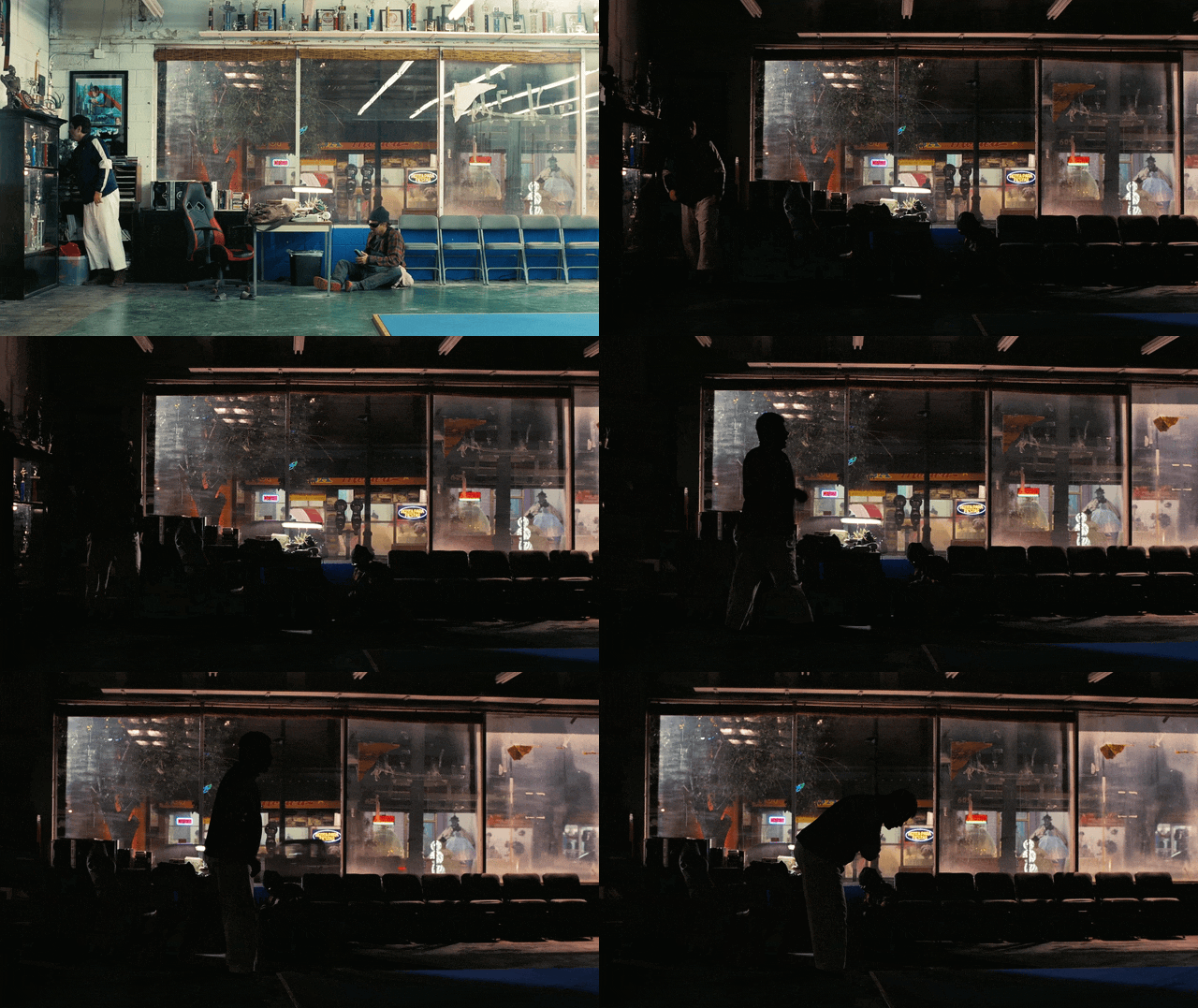
Bob’s goal is to get help. Sensei’s goal is to figure out what’s going on with Bob (and then to get Bob home, so he can deal with his own problem). The circumstance is that Bob’s being chased, and there’s a citywide crackdown on illegals.
All humor in the scene comes out of these two characters, religiously following their goals, using tactics that are natural to who they are. Bob doesn’t duck and crawl on the tatami because it’s funny, but because he could’ve been seen through that giant window.
3. Want the audience to laugh at the characters?
Keep your distance. Don’t dive into any of the characters’ subjective experiences, but present the situation as an observer.
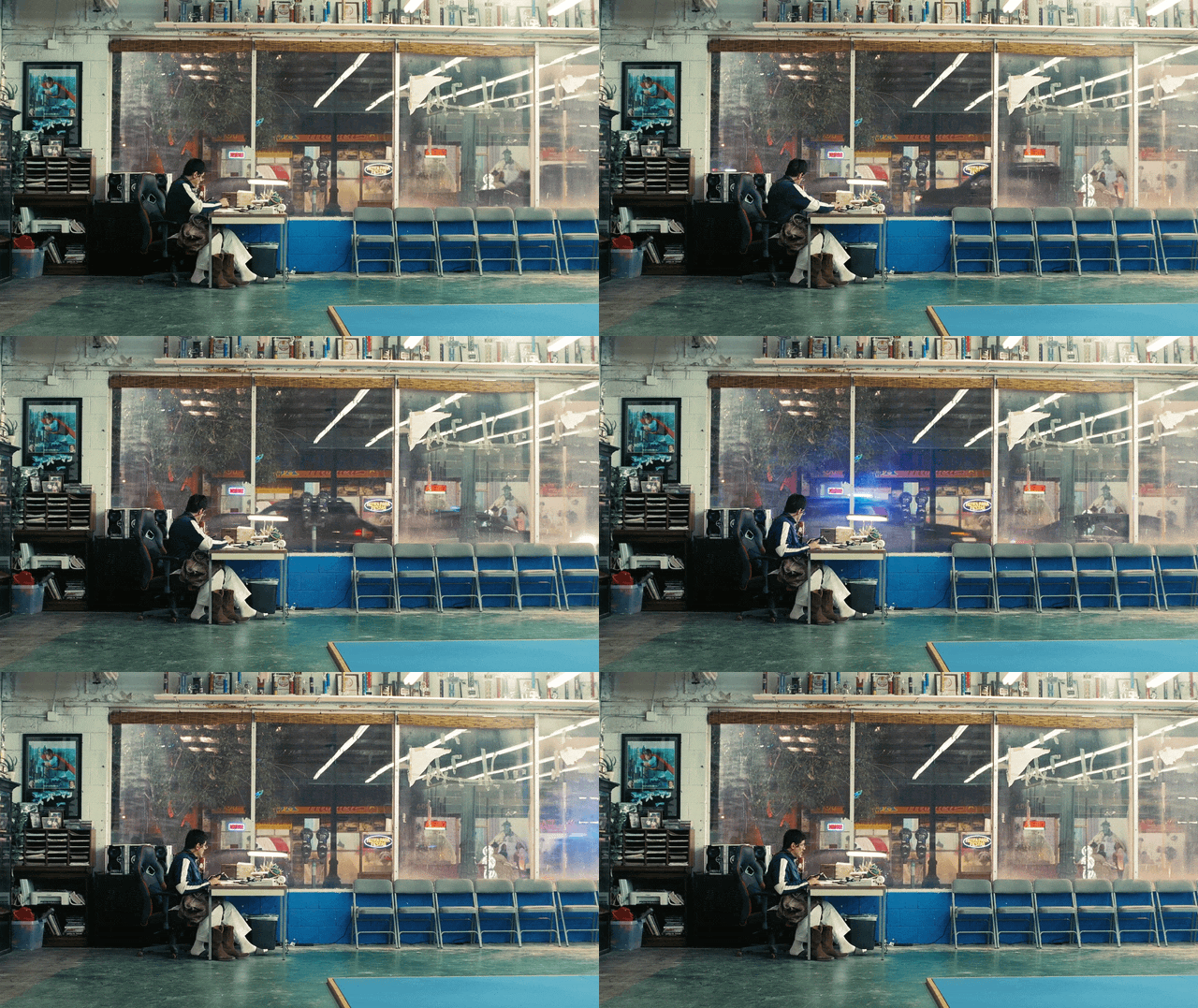
The principle of connection and separation (and having an objective POV, in this case) uses a lot of audio-visual tools, but there are still things you can do on the page.
(I wish the script for One Battle After Another was out already, so we can see exactly how PTA wrote this, but for now, you’ll have to make do with my recreation.)
For example, instead of writing something like “Bob rushes to the locked door, banging on it like crazy, looking around, and jumping at every siren in the street,” start the scene without the main POV character at all (Sensei’s on the phone for a good beat before Bob shows up), and treat the characters’ actions with a bit of distance “Bob chucks the nunchucks, and hunkers down as a police car SIREN (as in sound in the background) erupts and fades out — all the while Sensei calmly pulls on his leather cowboy boots”.
Don’t you think it’s funny that Netflix might bring the end of cinema and not AI? I think it’s hilarious and really sad.
And this mixture — hilarious but serious — is something every writer needs to learn. I don’t care if comedy is not your thing (I definitely struggle with a lot of aspects of it), but humor is simply too powerful a tool to leave aside.
So we won’t. We’ll watch and learn from the best (and maybe also not-so-best…)
That’s the hint I’ll leave you with today.
And as always.
Now go, watch a movie in a cinema. Chances are, they won’t make them for that big screen much longer.
Until next time.