

Why a Predictable Ending Isn't an Issue
Your audience guessed the ending 15 minutes in? It's not a problem if you know how else to engage them. Breaking down Home Alone.

Holidays are upon us.
Thank God (or any other entity).
I know some people hate going through holiday motions and would rather work on their projects, but I’ve been feeling exhausted longer than I can remember, and the promise of taking a few days off is probably the only thing keeping my mental health afloat.
All that is to say, it’s just fitting to break down a holiday movie today. A film that, as I mentioned in the article before, I’ve seen hundreds of times as a kid. The film that became a staple holiday movie in Russia (even though we don’t celebrate Catholic Christmas) — Home Alone.
Home Alone is a cult classic for a reason, for quite a few reasons, actually. But there’s one aspect of it that I want to highlight — it has a predictable ending. And we still catch it on air every year…
I love presents. Do you? Presents are awesome, especially when you don’t expect them.
I don’t expect you to share this article, but if you would… Daaaaaaaamn, it would be a great present for me. The button’s below:
What’s the scene?
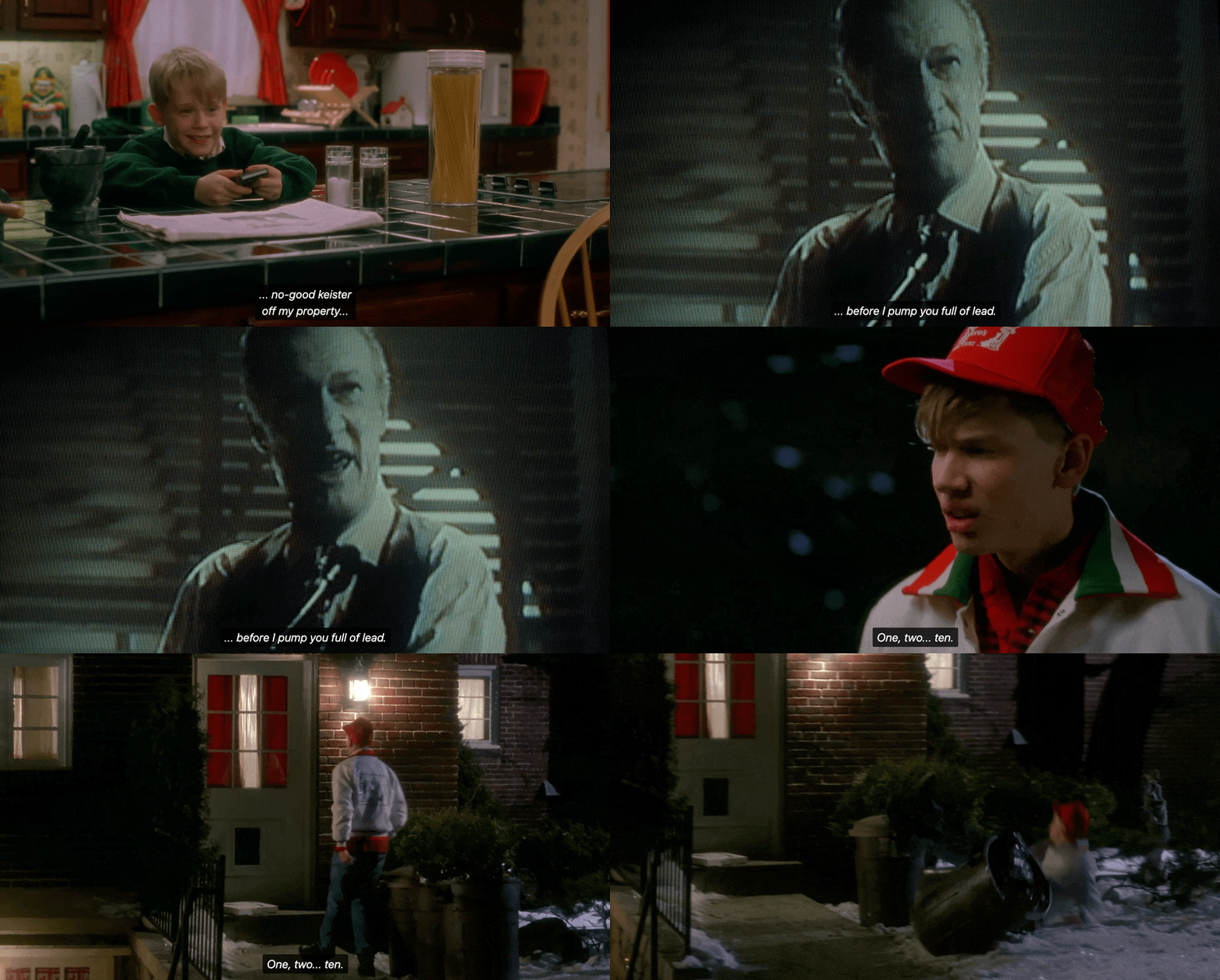
As per the title of the movie, Kevin is home alone. The burglars are circling in, and the family is out in Paris, worried sick. And Kevin? Well… he’s home alone.
We live on the most boring street in the United States, where nothing even remotely dangerous will ever happen. Period.
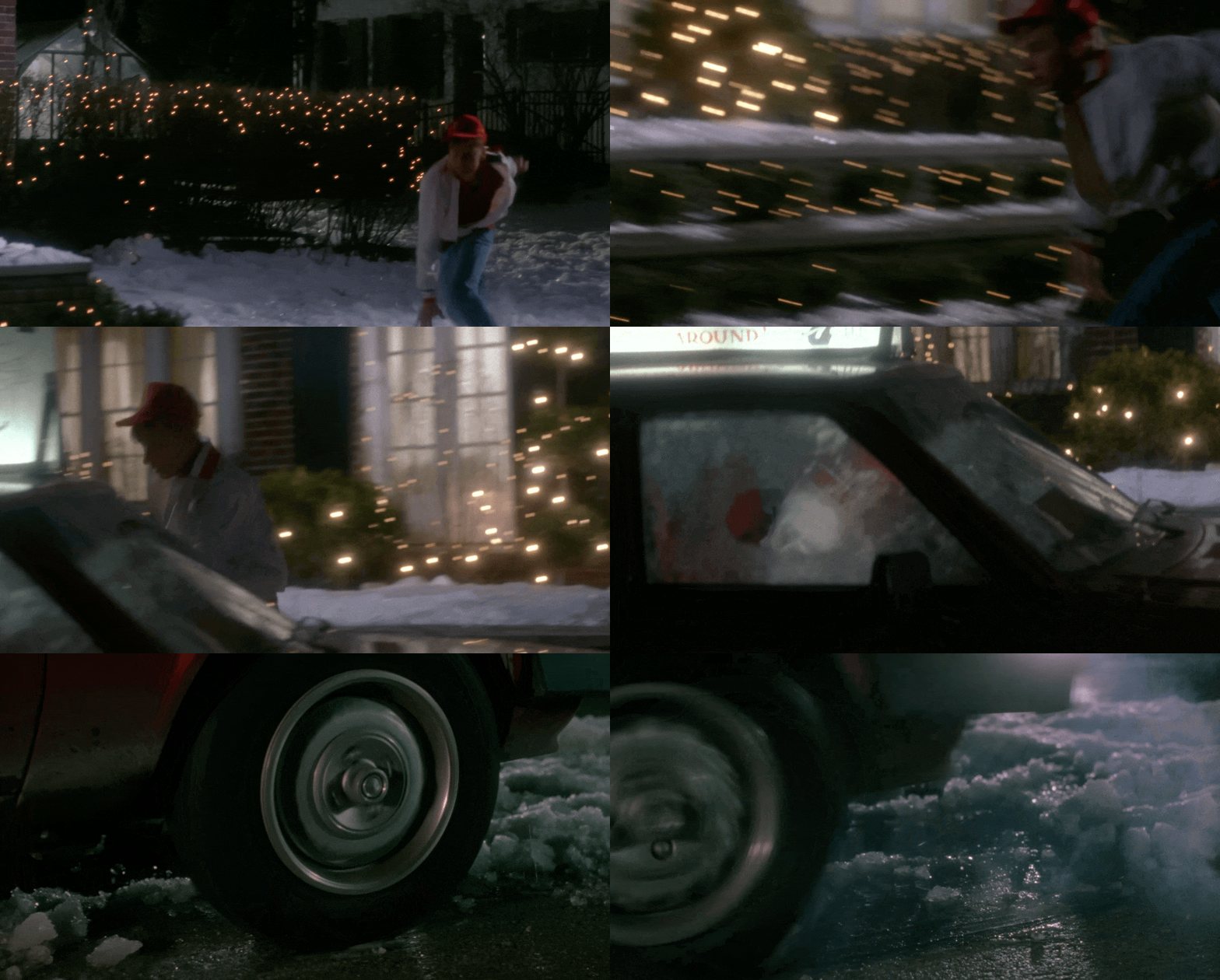
CUT TO — A car smashes into a figurine, sending it flying to the ground.
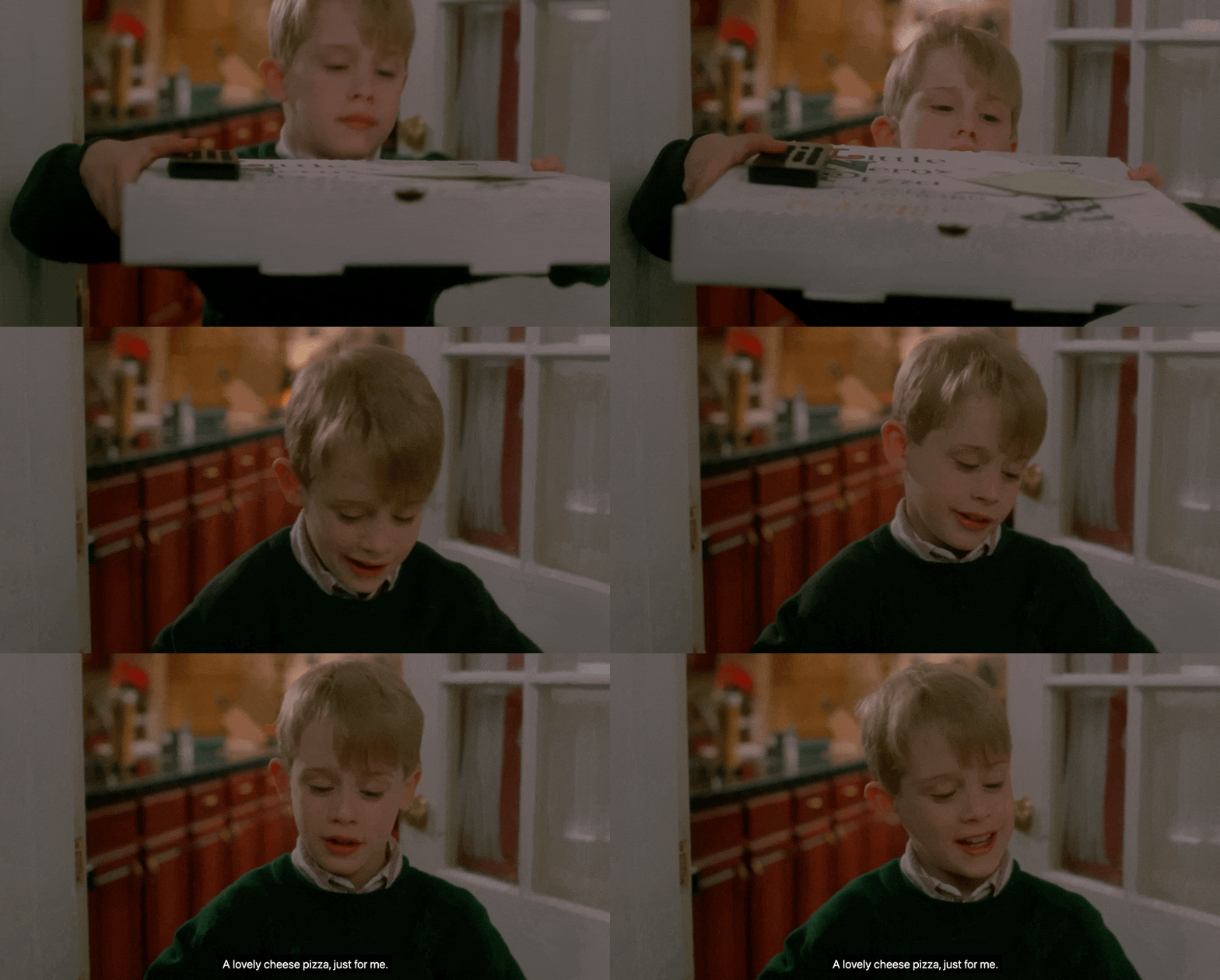
The pizza delivery boy promptly jumps out of the car and sets the figurine back up, before heading to the front door with a pizza box in hand. The note on the front porch sends him to the back door.
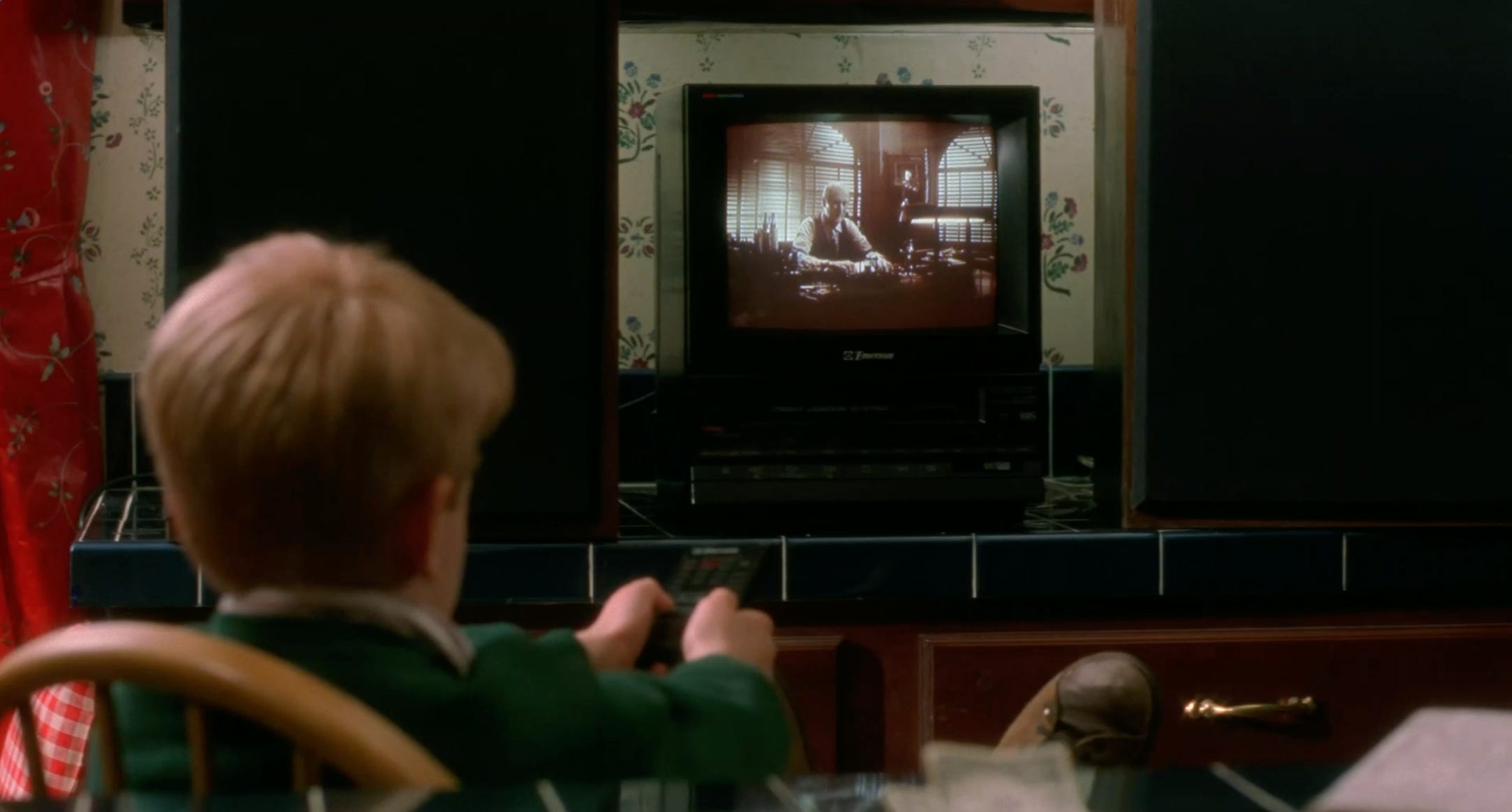
“Who is it?” asks a male voice we’ve heard before — the gangster voice from a made-up movie Angels with Filthy Souls. The boy answers it’s a pizza delivery.
The excerpt from the movie continues, masterfully manipulated by Kevin, keeping up with the pizza boy, who’s completely convinced he’s talking to some old man with an attitude.
As instructed, the boy leaves the pizza by the door and waits for the money (that Kevin slides to him through the pet door flap).
“Keep the change, you filthy animal,” continues the gangster on the TV screen, much to Kevin’s delight. Disappointed by the lack of a tip, and mumbling, “Cheapskate,” the boy is on the way out when he finally realizes who he’s been talking to.
Not an old man, but a real gangster.
Hey. I’m gonna give you to the count of ten to get your ugly, yellow, no-good keister off my property before I pump your guts full of lead.
The pizza boy scrambles as the shots are (seemingly) fired, falls over the garbage bin, and is out of there, never to be seen again.
And so, Kevin gets his plain cheese pizza, just for himself. As he wanted from the very beginning of the movie.
Why It Works Psychologically
1. What keeps us hooked when we know the outcome?
Curiosity in the How (pleasurable tension)
Home Alone is a family movie, a holiday comedy. Naturally, no matter how tough things get for Kevin, we, as the audience, know it’ll end well. He will fight off the burglars, and his family will get back to him. But hold on, how can a movie be interesting if we know exactly how it’ll end — not even halfway in? The fun of Home Alone (and movies like these) is not in the ultimate twist in the end, but in the creative ways the character solves the apparently insurmountable problem.
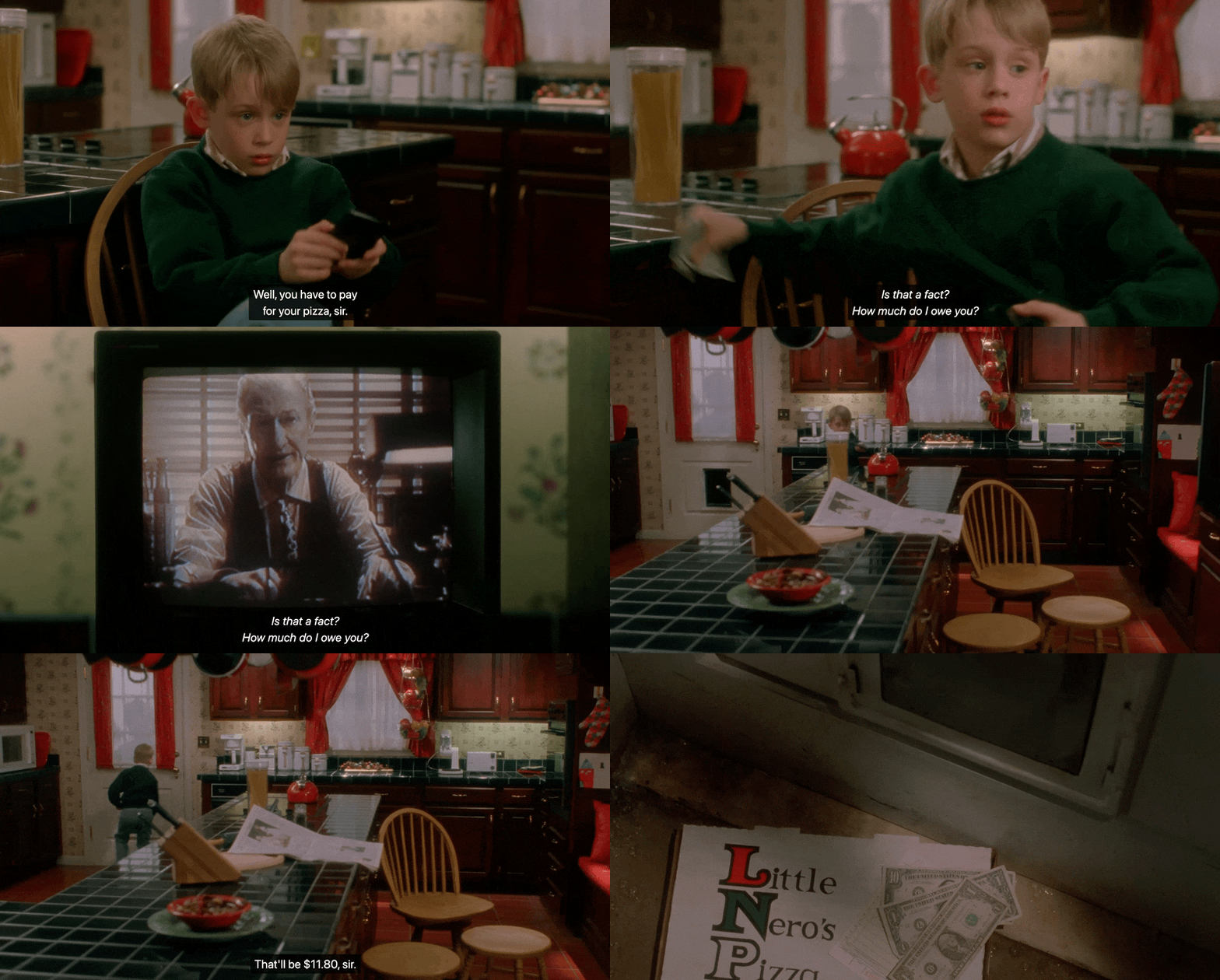
Psychologists find that spoilers or known endings can increase enjoyment because they let us focus on the fun details and clever execution rather than what happens. Here, we’re watching Home Alone not to see if Kevin gets away with it (we assume he will), but to relish how this 8-year-old pulls it off. This is sometimes called a “howdunit” suspense: we’re in for the ride, not the destination. Our curiosity drives us to pay close attention to Kevin’s elaborate prank, generating a “pleasurable tension” as we anticipate each next move.
In short, knowing the ending doesn’t kill the suspense – it turns it into a game of anticipation as long as the ride itself has twists and turns. We lean in, eager to see the ingenuity of the plan unfold, which is intensely satisfying when it finally does.
Psychology Cheat sheet:
What it is: A shift from “what happens” to “how it happens” — suspense built around execution, not outcome.
What it does: Keeps us engaged even when we know the ending, by triggering curiosity and inviting us to anticipate the character’s next move.
Why it works (science): Psychological research shows that known outcomes don’t ruin stories — they can enhance enjoyment by freeing cognitive load to focus on craft and detail. This form of anticipation builds “pleasurable tension,” tapping into our prediction-reward circuits.
Effect on viewers: We lean in, actively predicting and savoring each new beat. It makes Kevin’s success feel clever rather than inevitable — and deeply satisfying.
2. Why is the gangster movie excerpt much more than a joke?
Pattern = Truth (The Psychology of “Proof”)
Kevin using the gangster movie to prank the pizza guy isn’t the big payoff — it’s the second beat in a setup. First, we saw Kevin get genuinely scared watching the scene solo: the loud gunfire, the gravelly voice, the over-the-top threats. That’s the thesis. Then, in this pizza gag, we see the same exact footage terrify someone else. That’s the argumentation. Our brains are constantly tracking patterns, and once something happens twice in a row, we lock it in as a rule — a cognitive shortcut known as inductive inference.
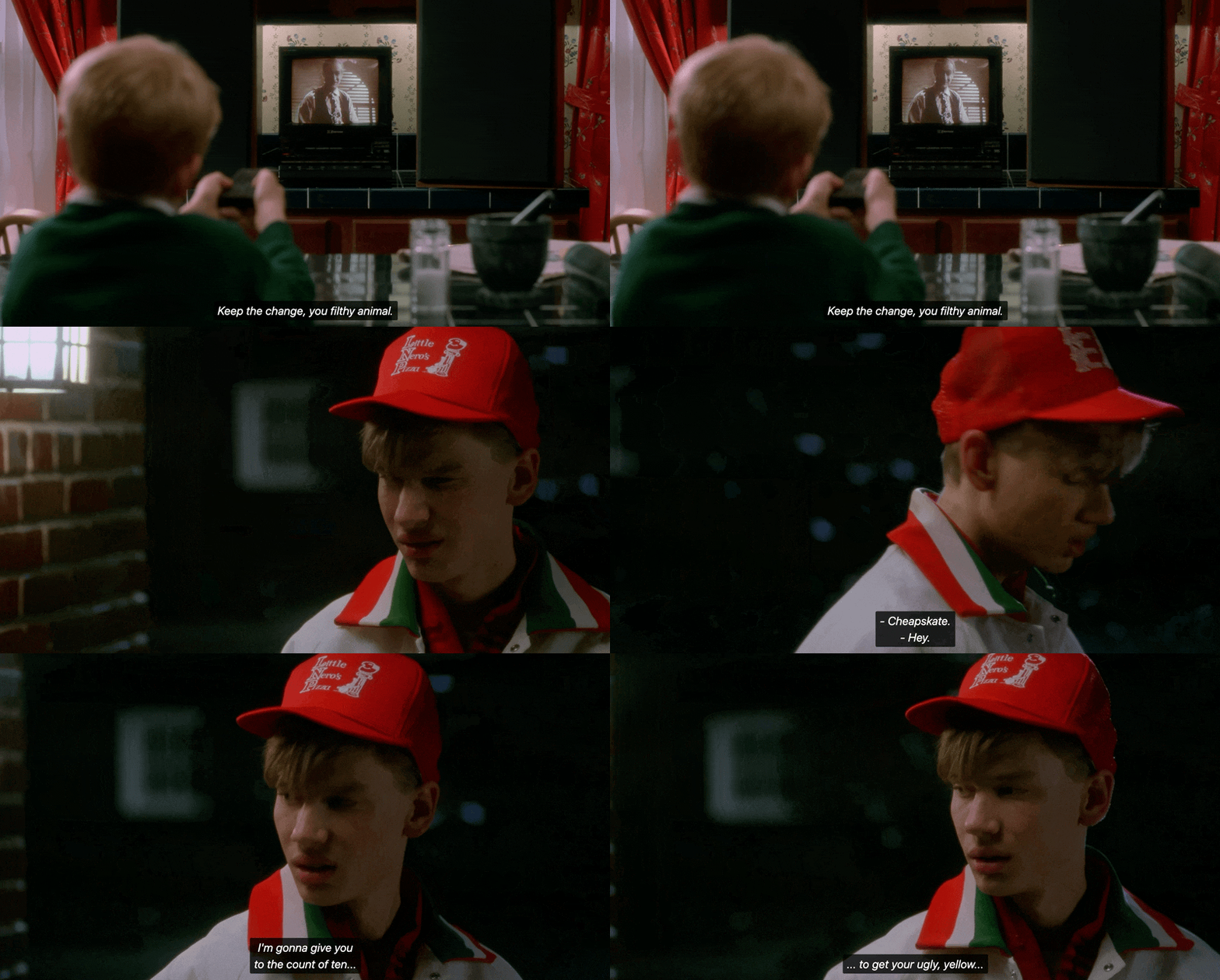
Inductive inference is one of the brain’s core reasoning tools — it’s how we generalize from limited examples to build usable rules. Unlike deductive logic (which moves from principle to specific), inductive reasoning works bottom-up: we notice patterns and assume they’ll hold. Evolutionarily, it’s how we survive in uncertain environments — if the last two red berries made us sick, we avoid red berries. In storytelling, it kicks in when we see a cause-and-effect pairing repeat. Here, the gangster movie scares Kevin (beat one), then the pizza guy (beat two). Our brain infers: “This movie can scare people off.” So later, when Kevin uses it to scare off a full-grown burglar, we don’t question it — we’ve seen the “logic” play out twice already.
Psychologically, this is driven by pattern recognition and confirmation bias: once we’ve formed an internal expectation, we unconsciously filter in anything that supports it. The more fluent a mental shortcut becomes, the less we interrogate it. So when the big payoff comes later, our brains nod along: of course it worked. That fake movie’s basically a weapon by now.
Psychology Cheat sheet:
What it is: A sequence of two similar beats that forms a pattern the brain takes as truth.
What it does: Establishes credibility for the prank through repetition — so when it’s used later on the burglars, it feels earned and believable.
Why it works (science): This taps inductive inference — our brain’s way of building rules from patterns. Once we see a cause-effect play out twice, it becomes a shortcut for truth. Pattern recognition paired with confirmation bias helps us accept the setup without questioning it.
Effect on viewers: We “buy” the prank instantly. The setup feels smart, the payoff feels earned, and the scene lands with extra satisfaction.
3. Why is Kevin’s prank on an innocent pizza boy funny?
Being in on It (dramatic irony and empathy)
Here, we, the audience, have secret information: we know the gunfire and gangster voices are fake, while the poor pizza kid does not. This classic dramatic irony pulls us deeper into the scene. Why? For one, it creates tension – we’re eagerly watching, almost wanting to warn the clueless delivery guy, which cranks up suspense even when we’re “safe” in knowing the truth. More importantly, it makes us empathize with and root for Kevin. Having more information aligns us with the prankster’s perspective; we feel like co-conspirators, on Kevin’s side.
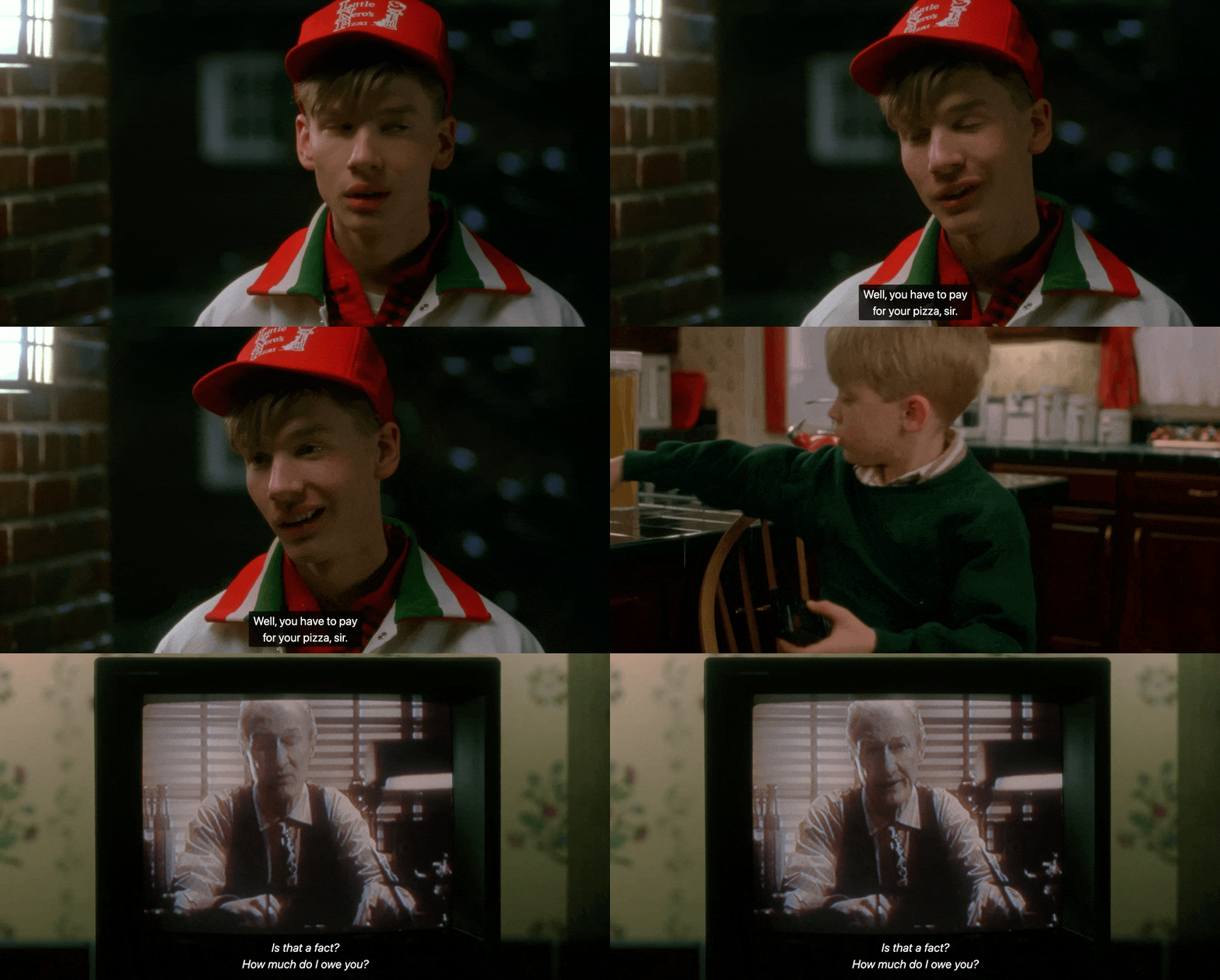
Psychology research shows that when viewers hold extra knowledge in a scene, they naturally track characters’ mental states more and engage their theory of mind – essentially placing themselves in the characters’ shoes. Here, we understand Kevin’s plan and nerves better than anyone, which endears him to us. We’re invested in his success and feel his triumph when it works (and his relief).
At the same time, watching the delivery guy blunder unknowingly through the prank gives us a sense of insider superiority that is thrilling and often humorous. We’re “in on the joke,” which heightens our enjoyment. This information gap engages us on multiple levels – cognitively (monitoring who knows what) and emotionally (cheering for the clever kid outwitting an adult). By letting us in on Kevin’s scheme, the film makes us active participants in the prank, amplifying both our suspense and our sympathy.
Psychology Cheat sheet:
What it is: The audience knows something the character doesn’t — in this case, that the gangster movie is fake.
What it does: Creates tension, amusement, and emotional alignment with Kevin — we feel like co-conspirators.
Why it works (science): Dramatic irony activates the theory of mind: we track what each character believes, deepening emotional engagement. We also feel a boost of insider status and reward from predicting outcomes correctly.
Effect on viewers: We root harder for Kevin, laugh at the delivery guy’s panic, and feel more connected to the scene. It’s suspenseful and satisfying — all at once.
How to build it dramaturgically?
1. I’m working in a genre where predictable endings are the norm (like family comedies, rom-coms, etc.) – what do I do?
Make the film about the journey, and not the destination.
First, make sure your central dramatic question poses a big enough HOW, instead of WHAT:
Is Neo really the chosen one and will prevail over agent Smith? Seems likely, but how, he’s just some random coder who knows nothing about the matrix?
Will Frodo destroy the greatest evil of all time? Yes, but how can a hobbit cross all the way to Mordor and stay alive?
These “how” questions are vital.
So the second step is — dive into the how: add twists and turns along the way, create obstacles that seem insurmountable, but with unexpected tactics your characters prevail (or not, at first).
Another way is to use the audience knowledge of the outcome against them. We know Romeo and Juliet are going to die, but we don’t want to believe it. The gruesome fate becomes a giant rock sliding down the mountain to crush the unsuspecting characters (dramatic irony btw). And further into the movie we are, the closer the bitter end is.
Simple, but so effective.
2. How do I make the audience buy into some of the crazier character tactics?
Use a proof device.
Proof device requires two elements: thesis and argumentation.
Thesis is the first instance that sets up the pattern (Kevin is scared watching the movie) and argumentation is the second instance that confirms the same pattern, but in a different setting/circumstance (the audio scared off the pizza boy).
Now when you use it the third time, the audience will already buy into it, because you made an arbitrary pattern — rules of the world — in their minds. Neat, right?
3. How do I get the audience on board with my character?
Use discrepancy of information — mainly shared secret and dramatic irony.
Shared secret — let the audience in on a secret only the character knows. It’s a great tool to build empathy (Heat does it really well, for example). The more threat to other characters the secret holds, the more potent it is, but you can also play it for humor, just like in our example with Kevin and the movie.
Dramatic irony — give the audience more information than the character. In classic dramatic irony (to build suspense), the information must be about a threat that the character isn’t aware of. In a family comedy, you can use dramatic irony for humor (pizza boy thinks the threat is real, but we know the truth).
Btw, in the scene, those two (shared secret and dramatic irony) are linked. In theory, if we wanted to have only the dramatic irony, we would have the movie playing (without Kevin being present) and the pizza boy unaware he was talking to the movie. But that would come with its own set of challenges.
In almost every breakdown, we talk about how important it is to surprise your audience, to keep them on their toes with clever twists and turns, and a major intrigue… but Home Alone doesn’t have an unpredictable ending. We know how it’ll end 15 minutes into the movie. But does it hurt it? Nope.
If you don’t consider a “good” movie, fair enough. But what about Shakespeare’s Romeo and Juliet? The ending is written out on the very first page. Literally. Look it up. And still we come back to that story in all shapes and forms.
Because, turns out, a clever intrigue is just one tool to keep people engaged. And we’re here for all the tips and tricks we can add to our arsenal.
And, of course, the last cat photo of 2025.

Until next time.
And happy holidays!