

How to Build Suspense
You'll need: peanuts, crazy haircuts, coins, and a happy accident. Looking at "No Country for Old Men".

We’ve all heard about suspense. We’ve all experienced suspense in cinema. We constantly experience a very close, albeit less positive emotion, anxiety. And while we pay therapists to get rid of the latter, we pay cinemas for the thrill.
How does suspense work psychologically? How do we reliably make it work without stepping into anxiety (not counting filmmakers’ anxiety attacks when they first watch the audience experience suspense in their film, or not)?
The Coen brothers have the answers. Let’s look at “No Country for Old Men”.
But before we do, just press this button below. It’s easy. Just click it. It’s so big and orange (ok, starting to sound weird).
Click it, though.
Let’s look at the scene
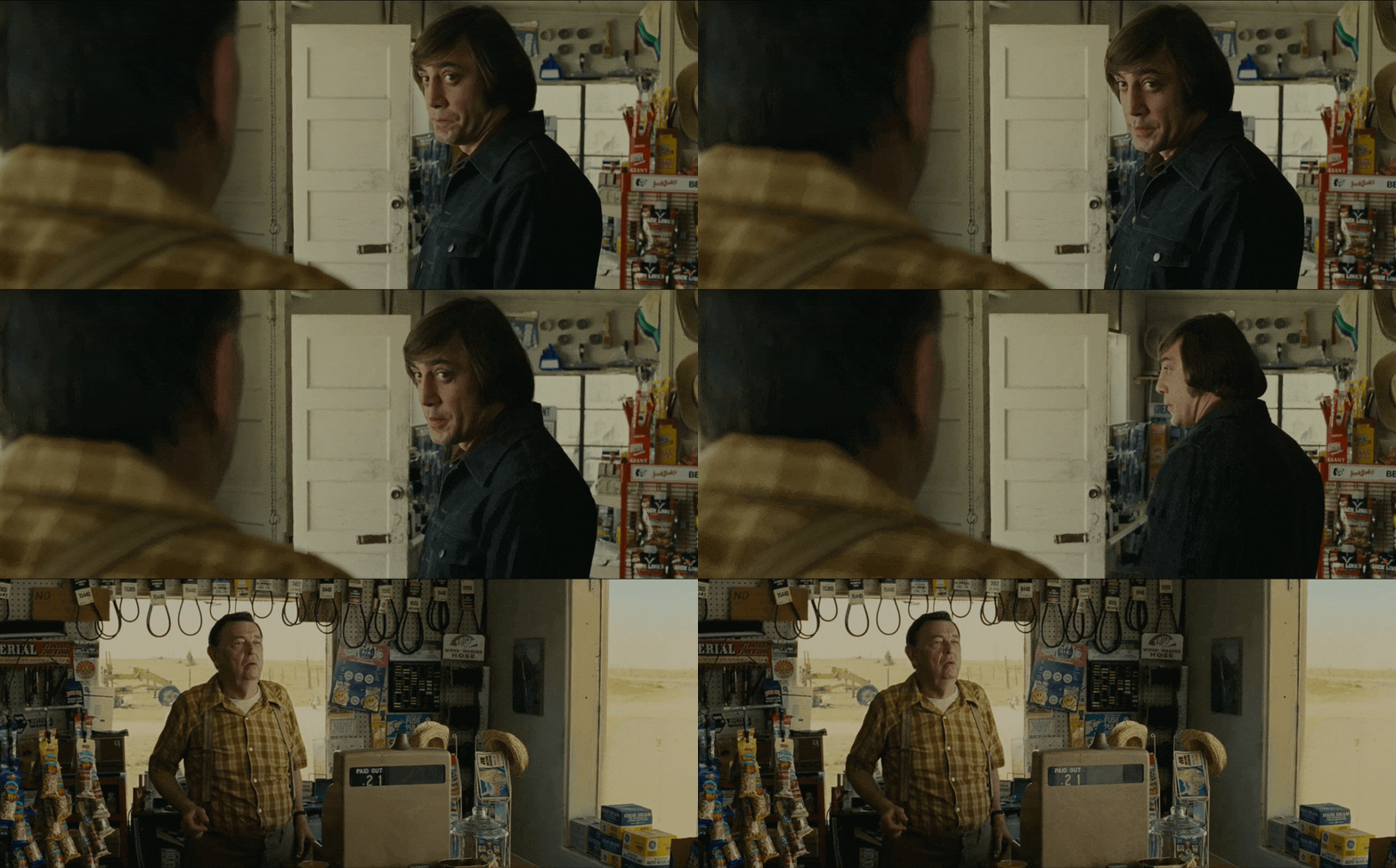
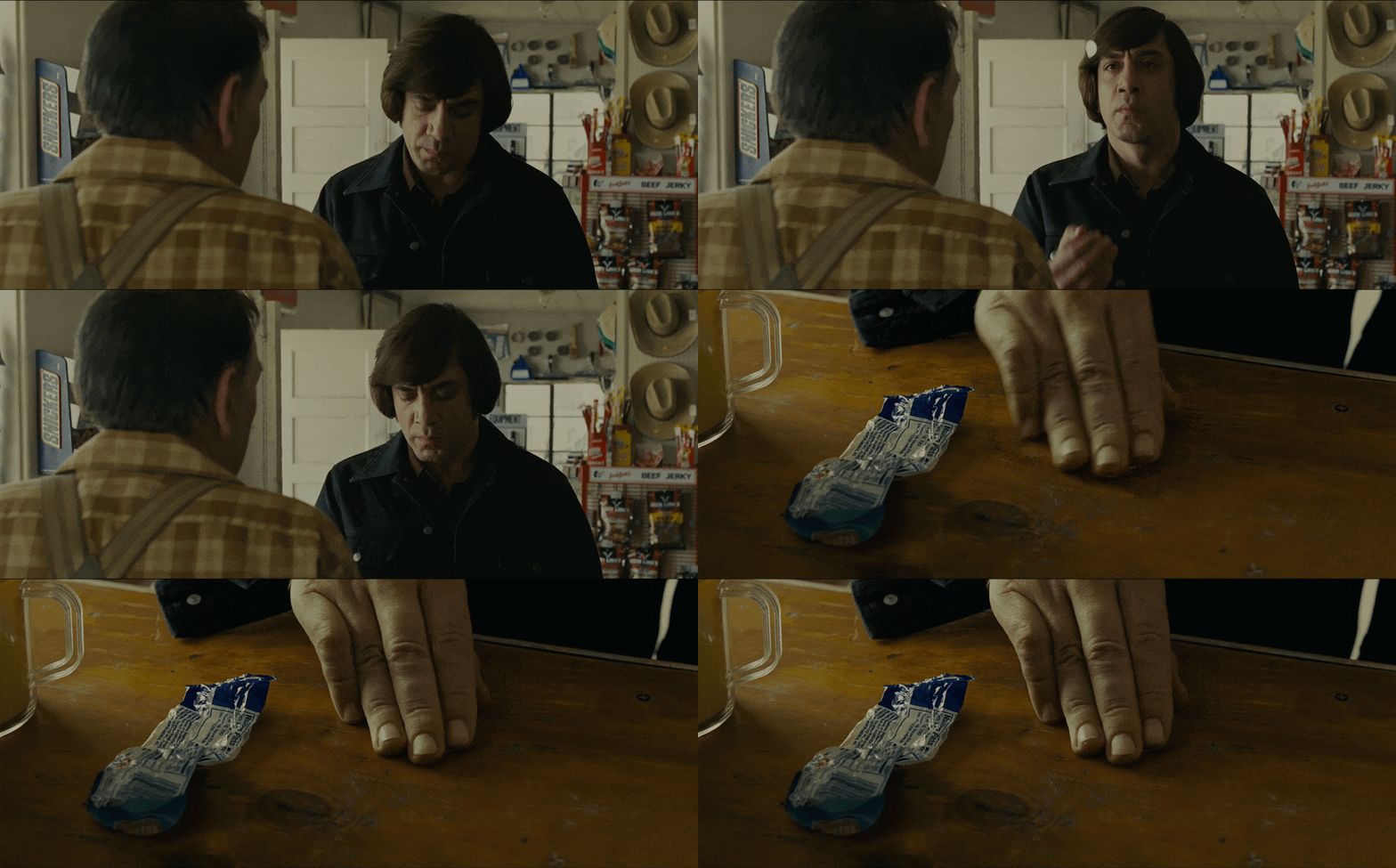
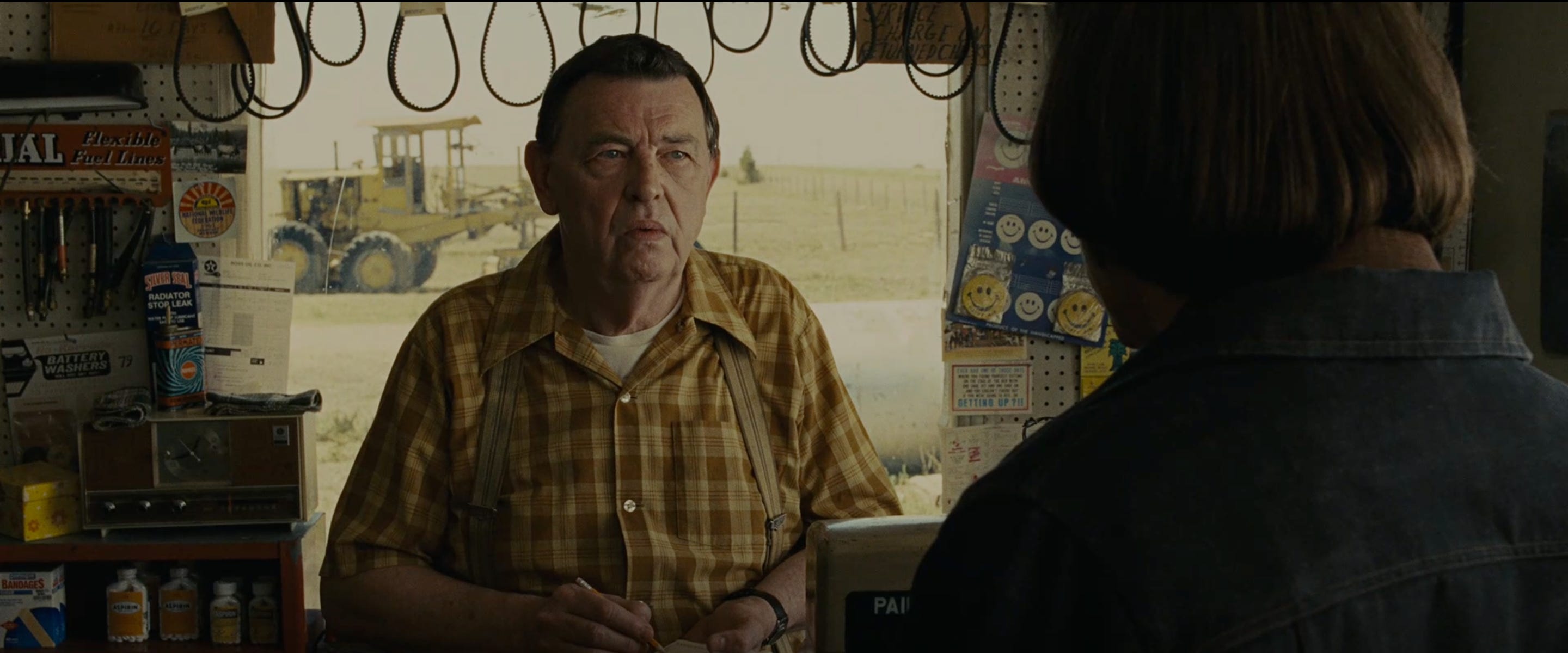
Anton Chigurh (a.k.a. Javier Bardem with a crazy haircut) stops by a gas station in the middle of nowhere. As he’s paying for gas and munching on peanuts, the gas station owner tries to pass the time with small talk, mentioning that Anton must be coming down from Dallas.
Grave mistake. As Anton is not one for small talk or witnesses.
An empty conversation builds into a nail-biter as the gas station owner slowly realizes what the audience already knows - his life is in imminent danger.
Finally, Anton produces the coin. Heads or tails. All or nothing. The gas station owner doesn’t know what he’s betting, but has a clear suspicion. As do we.
…Heads.
As the shaken owner is about to put his “lucky” coin away, Anton warns him not to put it in his pocket, where it would mix with others.
“Or it will become just a coin.
Which it is.”
I ADORE this scene. I love it to bits.
It’s so simple, yet you can cut through suspense with a knife; that’s how tense this interaction is. And not only does it give us the first real look at Anton as a character, it also makes us care for a simple gas station owner we’d never see or hear from again.
How to achieve this?
“Hire the best hair people in the business” (actual quote from Ethan Coen), and get your humor in — yes, even in the most dramatic of scenes.
Why It Works Psychologically
1. Vicarious Fear
We know Anton Chigurh is a walking death sentence long before the clerk does, so we end up feeling terror the clerk himself hasn’t clocked yet.
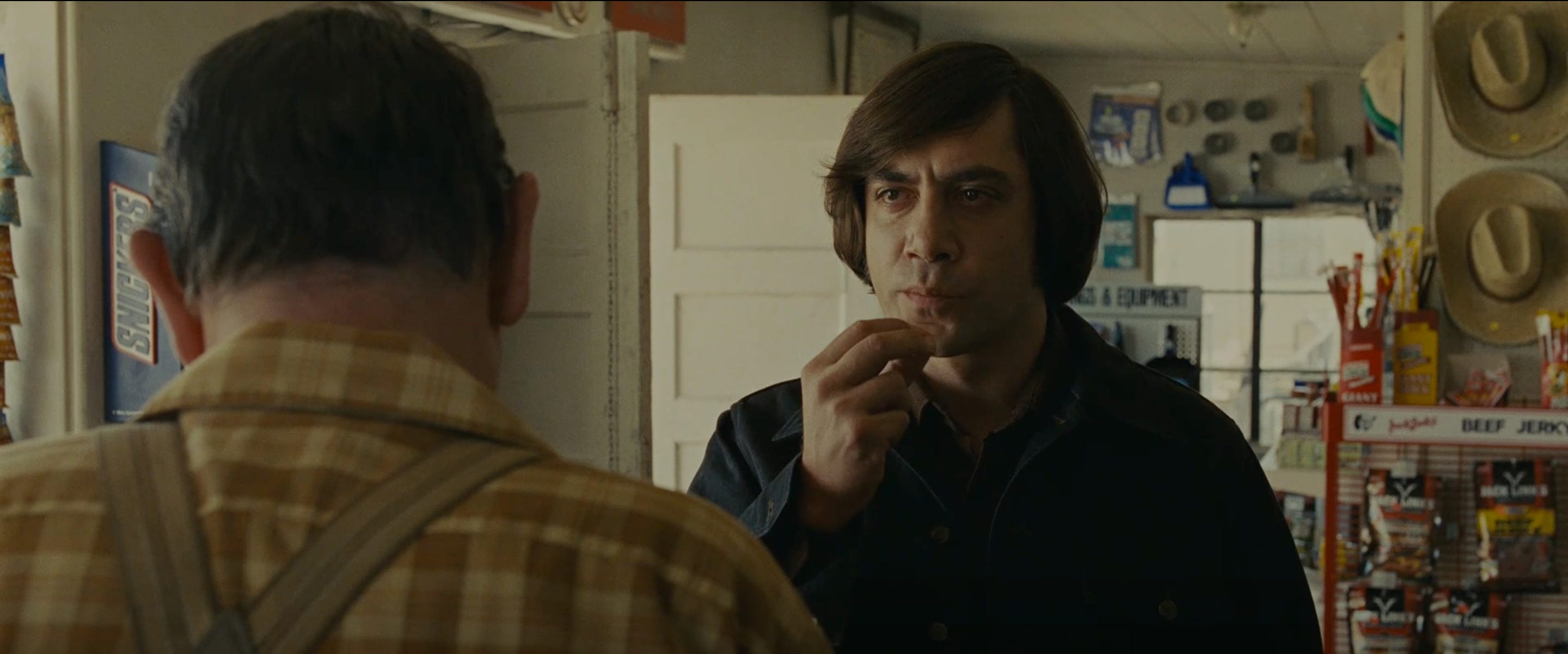
Studies on vicarious fear learning show that when people see a danger someone else can’t perceive, their heart rate and sweat response spike as if the threat were aimed at them. That knowledge gap forces us to carry all the dread the clerk can’t yet feel, binding us to him and super-charging suspense.
2. Cortisol Dip & Rebound
Choking on peanuts and the deadpan “just a coin” line give us a split-second laugh, and that laugh acts like a pressure valve: dropping cortisol and blood pressure, a proven stress-buffer effect. Once our system resets, the movie can crank the tension back up, and it feels sharper than if it had been held at a constant high.
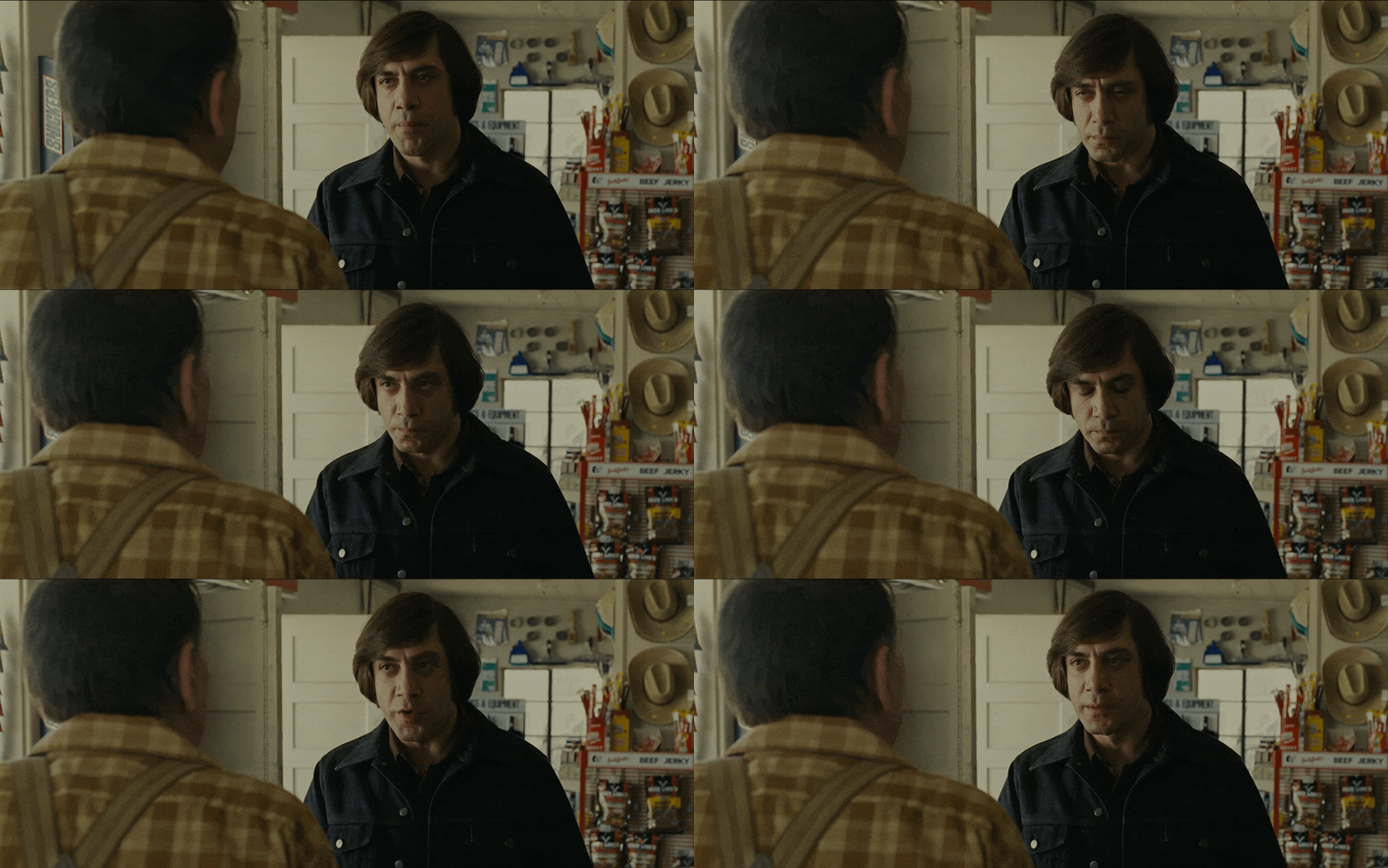
Horror-film research calls this the release–recharge cycle — short bursts of relief reset our nerves so the following jolt feels even sharper. Without those tiny chuckles, the scene would eventually numb us; with them, it stays razor-sharp.
3. Insight Reward
Chigurh never says, “You’re betting your life.” We have to piece that together from odd questions and chilly silence. That effort taps our curiosity-gap circuitry. When the quarter drops — this coin toss is life-or-death — the brain delivers the same dopamine surge seen in problem-solving “Aha!” experiments.
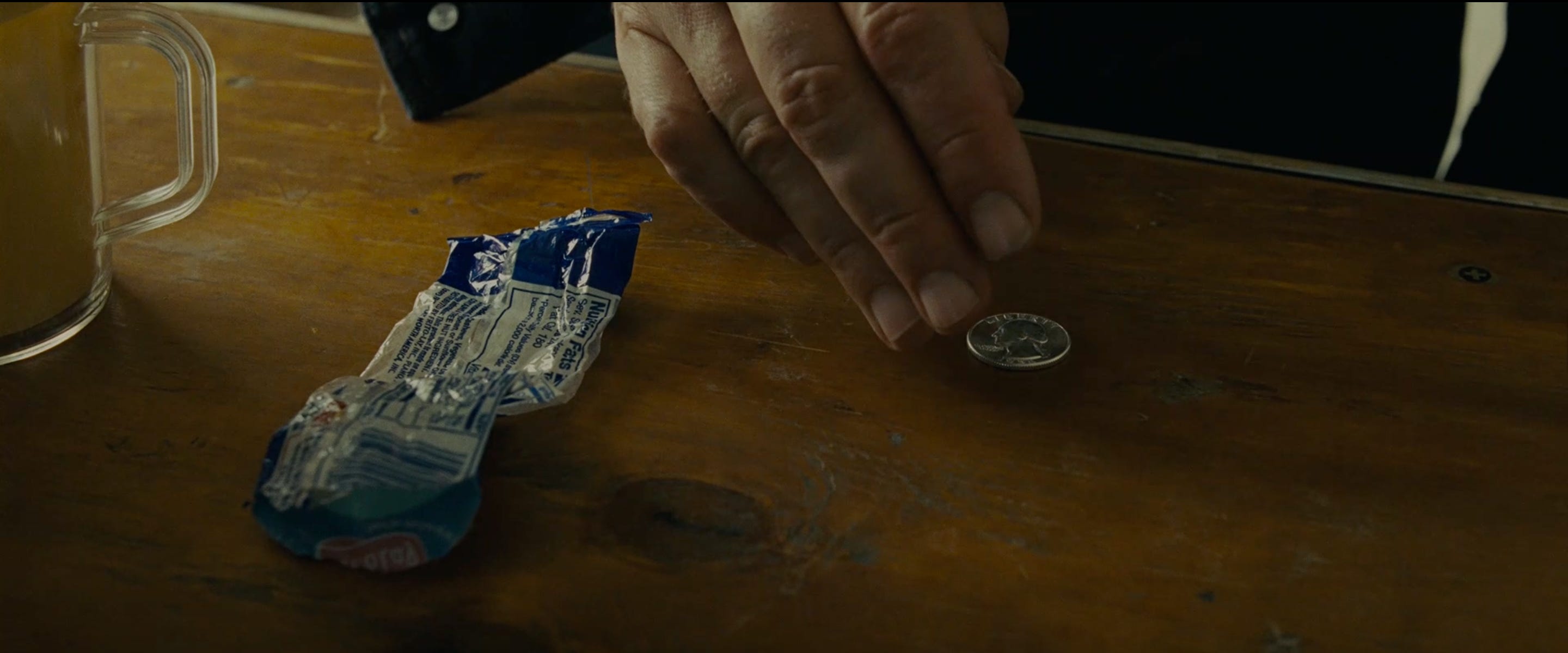
Cognitive psychologists call it the insight reward: information we infer ourselves sticks longer and feels better than facts handed over outright. By making us decode the threat under the polite small talk, the scene turns us from passive viewers into active participants, creating a far more memorable experience than a blunt “I’m going to kill you” speech.
I want suspense. Give me suspense! MAKE ME SUSPENSE!
How about sharing this article first? Yes. Mid-way. Choose a friend, share, boom. Done.
See, this is shitty suspense. Yes, you (hopefully) want to know how to build suspense, but this interruption is just annoying — it’s not suspenseful. ‘Cause no one’s in danger. And suspense needs danger.
Want to build suspense?
What you need is dramatic irony.
In nerd-speak, dramatic irony is a discrepancy of crucial information between the audience and the character. Crucial refers to a danger or threat the character is unaware of. Here’s the recipe:
A. Set a threat, a danger — not necessarily life-and-death, but a threat that is significant enough to derail/severely wound/destroy something valuable for the character.
B. Make sure the audience is aware of the threat through prior context.
C. Place the character you want the audience to care for in the danger you set up in step A, but don’t let the character know he is in danger.
This way, the audience has more information than the character, and the perceived danger activates vicarious fear learning, or simply put, people lean in awaiting the resolution to the scene/sequence in dread.
What to do
Create a threat that the character is unaware of, but the audience is clear on. As long as the threat is significant and relatable, the audience will feel emotional engagement.
Want to chain the audience to their seats?
Without using chains or ropes, although that would work too.
Use humor. Yes, even in your gloomy, melancholic Sundance story. Yes, even in your weird A24 horror. USE IT.
Humor doesn’t break tone; it enhances it, contrasting the dread. There’s an old writer’s saying, “make your comedies dramatic, and your dramas funny.” While mastering tension and release is an art (and science) on its own, there’s one great device we already spoke about in previous articles — the line of expectation.
If you don’t remember, the line of expectation is two clues and subversion.
Two clues: Chigurh questioning the clerk + Chigurh increasing pressure on the clerk. We read these two clues as a threat and note the pattern.
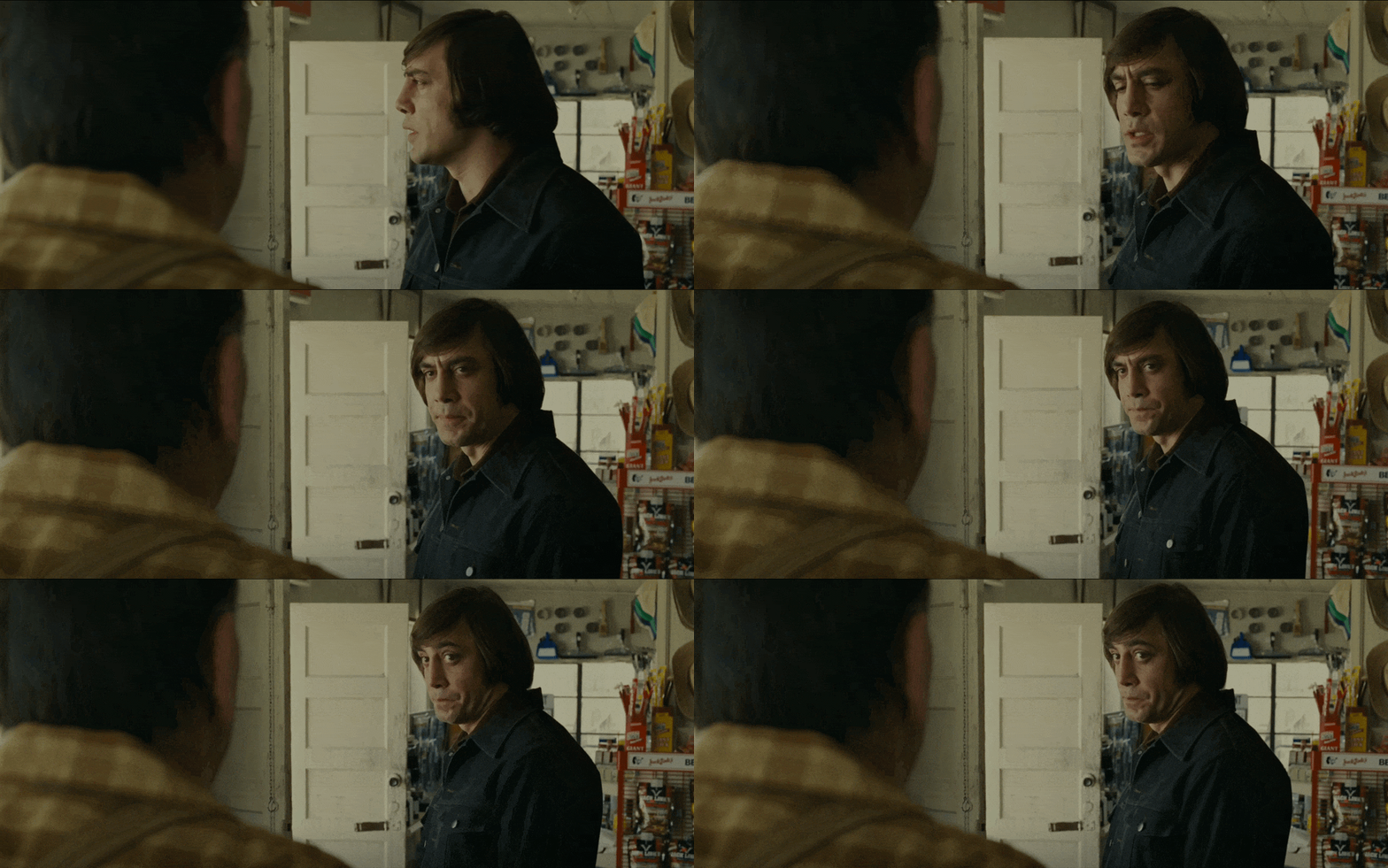
The third element must subvert the pattern: Chigurh chokes on peanuts.
Did you expect it? Nope. Did it match the perceived “tone” of the scene? Nope. Did you chuckle when it first happened? Likely.
(I’d imagine the Coens had exactly the same reaction since that wasn’t written in the script, and Javier Bardem actually choked on set. It works, though, precisely because the psychology of it does.)
What to do
Give your audience a breather after an extremely tense sequence in the script, and some micro-releases during. If you want to use the line of expectation, set a pattern with two clues in your scene/sequence, directing audiences’ expectations, and then subvert it with the third to create humor that will serve as a release.
Or just give your actor peanuts.
Want your audience to actively participate?
And not in throwing rotten tomatoes at the screen or the digital equivalent on Rotten Tomatoes.
It’s hard to describe what subtext is sometimes, but we know when it’s lacking instantly. Here:
”I will kill you… or not. Toss the coin. If you guess right, you’ll keep your life”.
(experiences a major dramaturgical ick).
Yeah. SUCKS. Even if that’s what Anton is really saying in the scene, just using different words.
So there it is - effective dialogue is a game of charades where the character says one thing, but the audience tries to guess what the actual meaning is using nonverbal cues, context, blocking, body language etc.
First, figure out the charade for yourself: what is really going on in the scene? What’s the goal of each active character? What’s the obstacle? What’s driving the scene?
If you don’t know, how is the audience supposed to guess?
So once you’re crystal clear — and I stress, crystal-as-water-in-Aegean-Sea clear, find the text that has little to do with what’s actually going on.
How do we know what’s going on? Use the clues such as prior context (we know what Anton is capable of coming into the scene), location (remote location allows for violence), body language (Anton is intense and unwavering), and action (game of coin toss).
What to do
Find text that goes against or hides the core drama of the scene, but leave enough clues for the audience to guess what’s going on using prior context, location, circumstance, actions, and nonverbal signs such as body language.
Play the game with the audience, don’t do all the work for them.
Suspense used strategically can get the audience to eat out of the palm of your hand (not literally, but if you’re into that kind of thing… as long as it’s consensual, you know). Jokes aside, you can build entire feature scripts just by using suspense effectively. It has been done.
Talking about suspense.
F
E
L
I
X
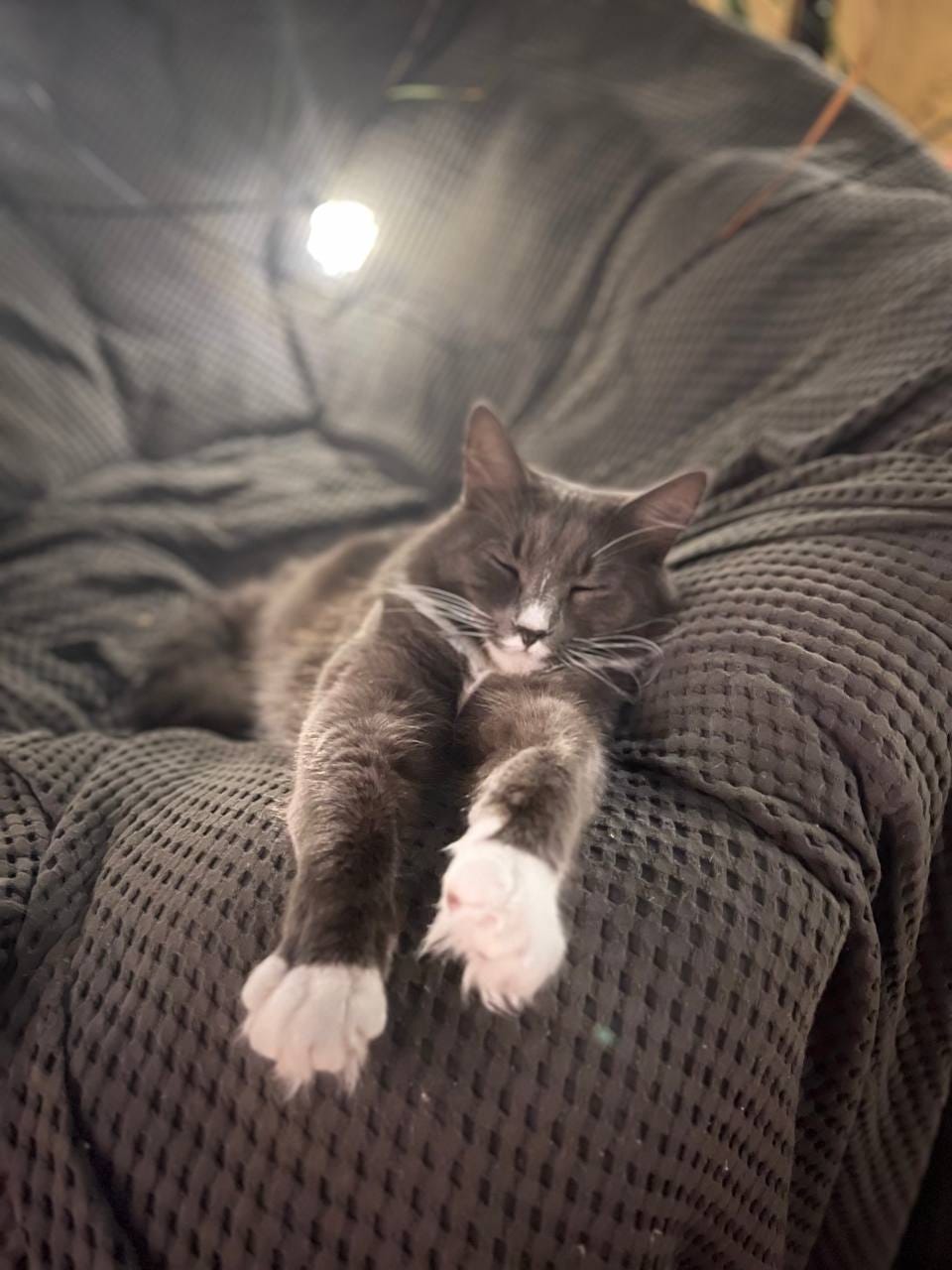
See where his paws are pointing?
Share the post. It does help.